Relief for Body is reader-supported. When you buy through links on our site, we may earn an affiliate commission. This doesn't affect our verdicts.
Cervical pillows are shaped, not just stuffed, and that shape is aimed at two groups: back sleepers who want a center dip to cradle the head, and side sleepers who need extra height to keep the neck level with the spine. Manufacturers generally do not design them with stomach sleepers in mind at all. If you fall asleep face-down, a contoured cervical pillow is usually the wrong shape for how your neck sits.
What separates a cervical pillow from a regular one
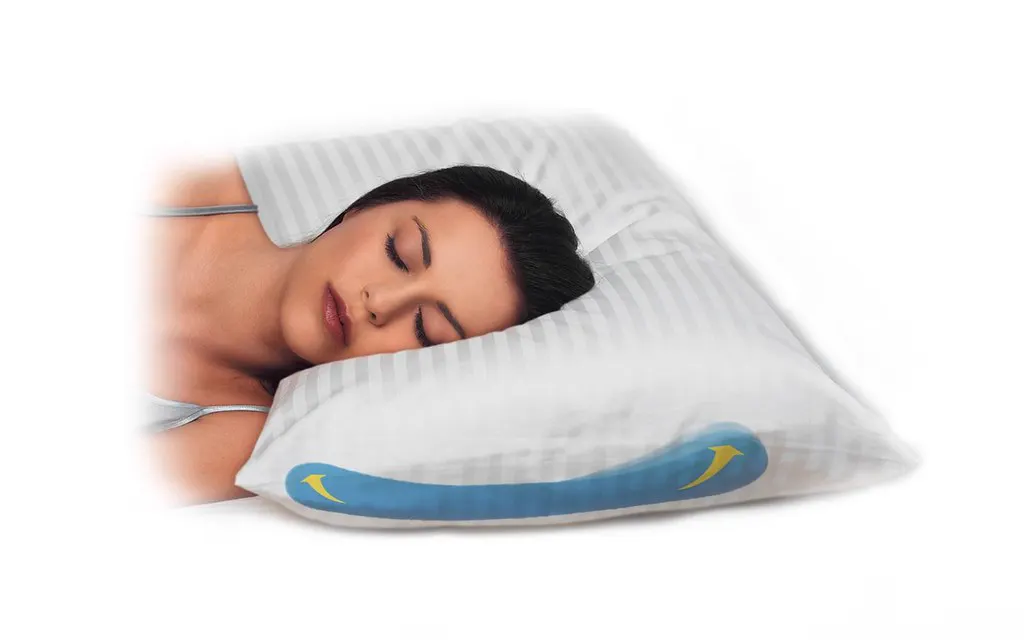
A standard pillow is a single loft, uniform block, soft or firm depending on the fill. A cervical pillow adds a deliberate contour, most commonly a lower center section for the head and a raised roll or ridge along the bottom edge that sits under the neck. Some designs use two different heights on opposite sides of the same pillow, one lower for back sleeping and one taller for side sleeping, so the sleeper flips the pillow rather than buying two. The goal, according to how brands describe the design, is keeping the neck’s natural curve supported instead of letting the head tip forward or the neck hyperextend backward.
Why back sleepers are a common target for this shape
Lying on your back, the neck curves slightly forward from the spine. A flat pillow that’s too thick pushes the chin toward the chest. One that’s too thin leaves the neck unsupported and the head tipped back. The center dip in most cervical pillows is built to fill that gap without over-elevating the head, following the same logic used in cervical support pillows recommended in general sleep-posture guidance.
Why side sleepers need a taller edge, not a dip
Side sleeping changes the geometry entirely. The distance between the mattress and the ear, measured across the shoulder, is usually wider than it is lying on the back, so the pillow needs more loft at the edge to keep the spine roughly straight from neck to tailbone. A cervical pillow with a raised side ridge is built for this, and it’s a different measurement problem than the center-dip design meant for back sleeping. Pillow height guidance for side sleepers covers how that loft measurement is generally figured out.
Who these pillows are generally not designed for
Stomach sleepers turn the head fully to one side for hours at a stretch, and most cervical contour shapes actively work against that position, since the raised sections get in the way rather than supporting anything. Sleep guidance aimed at stomach sleepers more often points toward a thin, flat, or even no pillow under the head at all, with a thin one under the pelvis instead. Someone who sleeps mostly on their stomach buying a cervical pillow because it’s marketed as “orthopedic” is likely to end up frustrated within the first night or two.
Memory foam versus fiber-fill cervical pillows
Both shapes show up in either material, but the feel and the maintenance differ enough to matter when choosing.
| Type | Best for | Trade-off owners report |
|---|---|---|
| Solid memory foam contour | Sleepers who want the shape to hold firmly all night | Retains heat, and has a noticeable smell out of the box for the first few days |
| Shredded memory foam | Sleepers who want to adjust loft slightly by fluffing | Loses contour definition faster than solid foam |
| Fiber-fill contour | Sleepers who run hot or want a softer feel | Flattens over months faster than foam, needs replacing sooner |
Why the mattress underneath changes the math
A cervical pillow’s loft is calculated against a specific gap, the distance between the mattress surface and the head or shoulder, and that gap moves depending on what’s underneath. A soft mattress or a plush memory foam topper lets the shoulder sink in several extra inches, which means a pillow sized for a firm surface can suddenly sit too tall. Manufacturers rarely mention this in the product description, since loft charts are usually built around an average mattress feel rather than any specific one. Anyone switching mattresses or adding a topper around the same time as a new cervical pillow should expect to reassess fit rather than assume the old height still works.
This is also why a pillow that felt right in a hotel bed can feel wrong at home, or the reverse. The surface changes the equation more than most buyers expect going in. A firm mattress with little give asks for less pillow loft to close the same gap, which is why brand sizing charts sometimes ask about mattress firmness before recommending a height.
What general sleep guidance says, and what it doesn’t
Sleep and ergonomics resources commonly describe cervical or contour pillows as a way to support neck alignment for people who wake up with a stiff or achy neck tied to their sleep position. That framing stops short of calling them a treatment for any diagnosed neck or spine condition, and for good reason. A pillow shape is a comfort and support choice, not a medical device. If neck pain is persistent, radiates into an arm, or comes with numbness, that’s a conversation for a healthcare provider rather than a pillow spec sheet.
Complaints that show up across owner reviews
A firmer-than-expected feel out of the box is the most repeated first impression, especially with solid memory foam versions, and most brands note a short break-in period in their own product descriptions. Smell fades within a week or two by most accounts. The second common pattern is sizing mismatch: buying a contour height meant for back sleeping while sleeping mostly on one side, which tends to produce the same neck strain the pillow was bought to avoid. Matching the contour height to how you actually sleep matters more than the brand name on the box.
Care instructions add a third pattern. Most cervical pillows ship with a removable outer cover that’s machine washable, while the contoured foam or fiber core inside is spot-clean only, since saturating memory foam tends to break the material down faster than normal wear does. A second cover, bought separately, is a common workaround for keeping one on the pillow while the other dries. Shape retention follows the material split from the table above: solid foam typically holds its contour for a year or more, while fiber-fill compresses and needs replacing sooner, sometimes within several months of nightly use.
For a broader look at matching a sleep problem to a product category rather than starting from the pillow aisle, this overview of sleep comfort products is a reasonable starting point, and general guidance on replacing a pillow covers when a flattened contour has stopped doing its job.
Verdict
A cervical pillow is built for back and side sleepers who want the neck supported at a specific height, not a universal upgrade. Match the contour to your actual sleep position before buying, and treat persistent neck pain as a reason to see a clinician, not a shopping problem.
What does “cervical” mean on a pillow, exactly?
It refers to the cervical spine, the neck section of the spine, and describes a pillow shaped to support its natural curve rather than a flat, uniform pillow. It’s a design description, not a medical certification or a guarantee of any specific outcome.
Can stomach sleepers use a cervical pillow?
Generally not comfortably. Most cervical contours are built for back or side sleeping, and the raised sections tend to interfere with the head-turned-to-the-side position stomach sleepers use. Sleep guidance for stomach sleepers usually points toward a thin, flat pillow instead.
How do I know which loft height to buy?
It depends mainly on sleep position and shoulder width. Side sleepers typically need more loft at the pillow’s edge than back sleepers need at the center. Many brands publish a sizing guide based on shoulder measurement, and checking it before buying avoids the most common return reason.
Is a firm cervical pillow better than a soft one?
Neither is universally better. Firmness is a comfort preference layered on top of the shape. Some people adjust to a firm memory foam contour within a week; others prefer a softer fiber-fill version that flattens sooner but never feels rigid to begin with.
Will a cervical pillow help with neck pain?
Manufacturers and sleep guidance frame these pillows as comfort and alignment support, not a treatment for neck pain. Some people report waking up with less stiffness after switching. If pain is persistent, severe, or comes with numbness or tingling, that’s worth discussing with a healthcare provider.
From the Relief for Body desk
Every guide here is built from the manufacturer’s own documentation, published safety guidance, and the pattern in what owners report over months of use, not from a lab or a clinic. Nothing is sponsored, and verdicts are settled before any affiliate link goes in. We are not clinicians, and nothing on this site replaces one. How we review explains the process.
This article is general information, not medical advice. If pain is sharp, persistent, or getting worse, see a clinician.
Google lets you pick which sites come up first in your own results.