Relief for Body is reader-supported. When you buy through links on our site, we may earn an affiliate commission. This doesn't affect our verdicts.
The stretches most often recommended for plantar fasciitis target two things: the tissue along the sole of the foot and the calf muscles that pull on the heel. A seated stretch that draws the toes back toward the shin, a calf stretch against a wall and a towel or strap stretch done before you stand up in the morning form the core of most home programs. They work best done gently, several times a day, for weeks rather than days. Sharp pain during a stretch is a signal to ease off, not to push through.
This article is general information, not medical advice. Heel pain has more than one cause, and a doctor or physical therapist who has examined your foot can confirm the diagnosis and adjust these exercises. Check the section on when to get help before you start.
Why stretching helps the heel
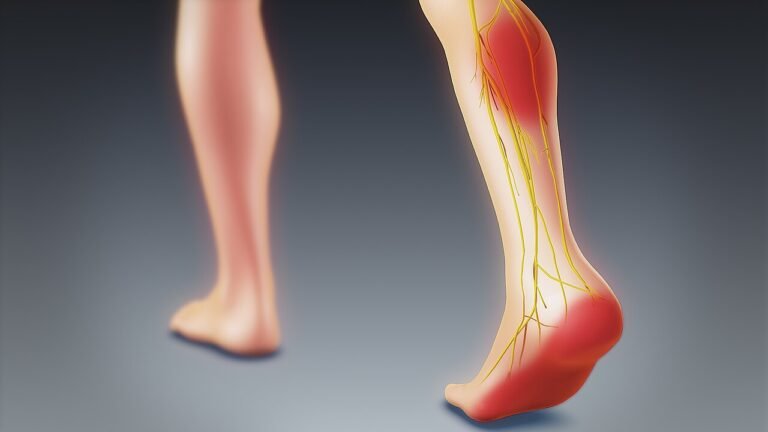
The plantar fascia is a thick band of tissue that runs from the heel bone to the base of the toes and supports the arch. When it is irritated, the pain usually sits at the front of the heel and is worst with the first steps after sleep or after sitting for a while. Overnight the foot rests with the toes pointed slightly down, so the fascia and the calf tighten, and the first steps stretch them suddenly.
Tight calves add to the load, because the Achilles tendon and the plantar fascia work as one chain. That is why most programs pair a foot stretch with a calf stretch instead of doing either one alone.
1. Seated toe pull, before your first steps
This is the stretch clinicians mention most for morning pain, and you can do it sitting on the edge of the bed.
- Cross the sore foot over the opposite knee.
- Hold the base of the toes and pull them back toward the shin until you feel a stretch along the arch.
- Run the thumb of your other hand along the arch. It should feel firm, like a taut cord.
- Hold for about 10 to 15 seconds, relax, and repeat around 10 times.
Doing a set before you stand up takes the edge off those first painful steps for many people.
2. Towel or strap stretch
Sit on the floor or the bed with the leg straight. Loop a towel or a stretching strap around the ball of the foot and pull gently toward you, keeping the knee straight. You should feel it in the calf and along the sole.
- Hold for about 30 seconds and repeat a few times.
- A strap with loops lets you adjust the angle without gripping hard. Our guide to using a stretching strap for the hamstrings covers the same setup for the back of the leg.
- If you are choosing between equipment, stretching strap vs resistance band explains which one suits holding a stretch and which suits strengthening.
3. Wall calf stretch
Stand facing a wall with your hands on it at shoulder height. Step the sore leg back, keep that heel on the floor and the knee straight, and lean forward until you feel the stretch in the upper calf. Hold about 30 seconds.
Then bend the back knee slightly while keeping the heel down. The stretch moves lower, toward the Achilles tendon. Doing both versions covers the two main calf muscles. Keep the back foot pointing straight ahead, not turned out.
4. Step stretch
Stand on the edge of a stair with the balls of your feet on the step and a hand on the rail. Let the heels drop slowly below the level of the step until you feel the calves stretch, hold for 15 to 30 seconds, then rise back up. It is a stronger stretch than the wall version, so start with a small drop and keep a firm hold of the rail.
5. Towel scrunch and marble pick-up
These build strength in the small muscles inside the foot that help support the arch.
- Towel scrunch. Sit with a small towel flat on the floor under your foot. Curl your toes to pull the towel toward you, then push it back out. Repeat 8 to 12 times.
- Marble pick-up. Pick up marbles or small objects with your toes and drop them in a cup.
6. Heel raises
Once the stretches feel comfortable, calf strengthening is commonly added. Stand holding a counter, rise slowly onto your toes, and lower slowly back down. Start with both feet. Many physical therapists later progress to one foot at a time, or to raises with a rolled towel under the toes so the fascia is stretched as the calf works. Build up gradually, since this loads the heel more than stretching does.
Rolling the arch
Rolling the sole over a ball, a foam roller or a frozen water bottle for a few minutes is a common addition. The frozen bottle combines gentle massage with cold, which some people prefer after a long day on their feet.
How often, and for how long
- Short sessions spread through the day tend to suit this condition better than one long session.
- Always do the toe pull before your first steps in the morning and after long periods of sitting.
- Stretch to a mild, steady pull. Bouncing or forcing the stretch can irritate the tissue further.
- Expect gradual change. Plantar fasciitis usually improves over weeks to months, and it is the regular habit that counts.
Heat, ice and footwear
Cold is often used on the heel after activity, for 15 to 20 minutes with a cloth between the ice and the skin. Some people find warmth helps the calf before stretching. Do not fall asleep on a heating pad; sleeping with a heating pad explains why burns happen even at low settings.
Supportive shoes with some heel cushioning, and avoiding walking barefoot on hard floors while the heel is sore, take load off the fascia between stretching sessions. Night splints that hold the foot at a right angle are another option your clinician may suggest if mornings stay painful.
When to see a doctor
Get checked if the heel pain followed a fall or a sudden pop, if the foot is swollen, red or warm, if you have numbness or tingling in the foot, if you cannot put weight on it, or if several weeks of home care have not helped. Pain at night while resting, fever or heel pain together with back pain that runs down the leg also need a medical opinion. Our guide to low back pain red flags covers the back-related warning signs.
Questions readers ask
Should you stretch plantar fasciitis?
Gentle stretching of the sole and the calf is one of the first-line home treatments recommended for plantar fasciitis. Stretch to a mild pull, not to pain, and stop any exercise that makes the heel sharply worse.
What is the best stretch for plantar fasciitis?
The seated stretch that pulls the toes back toward the shin is the one most often singled out, especially before the first steps of the day. It is usually combined with a calf stretch against a wall, because tight calves add load to the heel.
Do calf stretches help plantar fasciitis?
Yes, they are a standard part of most programs. The calf, the Achilles tendon and the plantar fascia work together, so a tight calf increases strain on the heel. Stretch with the knee straight and then slightly bent to reach both calf muscles.
How long does it take for stretches to help?
Many people notice the morning pain easing after a few weeks of daily stretching, but full recovery often takes months. If there is no change after several weeks, see a doctor or physical therapist to confirm the cause.
Is walking good for plantar fasciitis?
Some walking in supportive shoes is usually fine, but long walks or standing on hard floors can aggravate the heel while it is sore. Cut back on the distance, avoid going barefoot on hard surfaces, and build up again as the pain settles.
From the Relief for Body desk
Every guide here is built from the manufacturer’s own documentation, published safety guidance, and the pattern in what owners report over months of use, not from a lab or a clinic. Nothing is sponsored, and verdicts are settled before any affiliate link goes in. We are not clinicians, and nothing on this site replaces one. How we review explains the process.
This article is general information, not medical advice. If pain is sharp, persistent, or getting worse, see a clinician.
Google lets you pick which sites come up first in your own results.