Relief for Body is reader-supported. When you buy through links on our site, we may earn an affiliate commission. This doesn't affect our verdicts.
A stretching strap is a loop of webbing, usually with stitched or adjustable rungs, that you hook around the ball of your foot to hold a hamstring stretch without needing your hands to reach that far. Lie on your back, loop the strap around one foot, keep the leg mostly straight, and use the strap to hold gentle tension while your hands stay relaxed instead of straining to grab your toes. That’s the entire mechanism. The rest is about doing it slowly and stopping well before anything sharp or painful shows up.
Manufacturers and general stretching guidance describe the same handful of rules regardless of brand: no bouncing, ease into the stretch rather than yanking on the strap, and back off the moment you feel pain rather than a mild pull.
How the strap is meant to be used
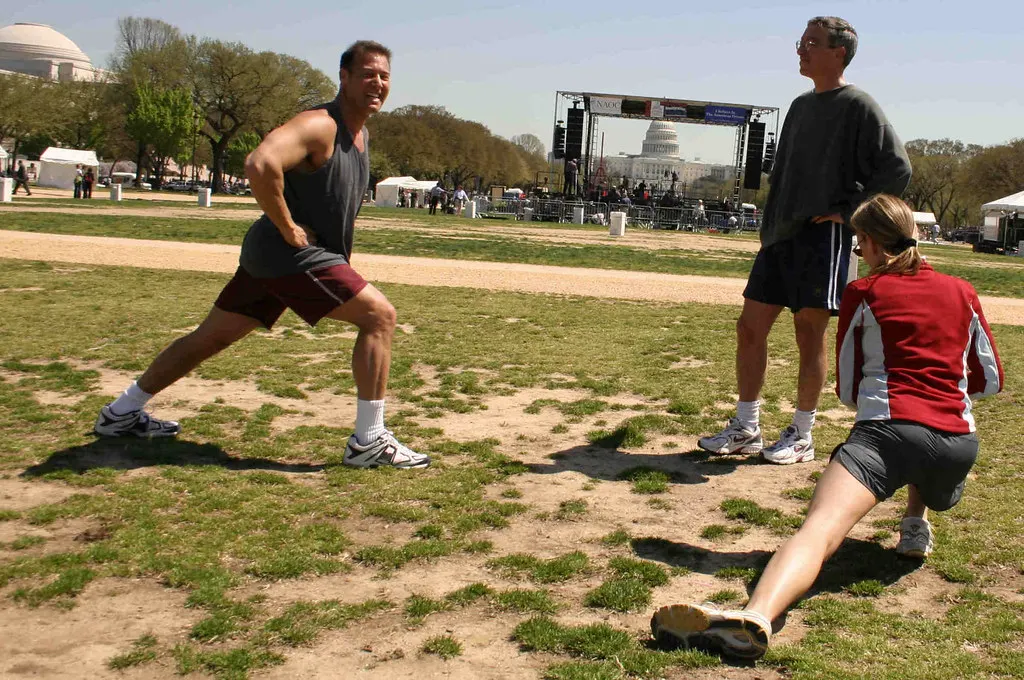
Lie flat on your back on a mat or the floor. Loop the strap around the ball of one foot, holding one end in each hand, and extend that leg toward the ceiling while keeping the other leg flat or bent with the foot planted. Use the strap to draw the leg gently toward you, only as far as a comfortable stretch, and hold there. General stretching guidance published by fitness organizations and physical therapy associations describes holding a static stretch like this for roughly 15 to 30 seconds, repeated 2 to 4 times per side, without forcing the range past what feels like a mild pull.
The strap’s job is to remove the arm strength and flexibility the movement would otherwise need. Without one, a lot of people compensate by rounding their lower back or lifting their head and shoulders off the floor just to reach the foot, which shifts the stretch away from the hamstring and adds strain elsewhere. The strap keeps the shoulders down and the spine neutral while your hands do the holding instead of the reaching.
The rungs, loops, and rings, and what they’re actually for
Most straps come with a series of stitched loops or D-rings along the length of the webbing, letting you shorten your grip as flexibility improves over time rather than needing a whole new strap. Early on, gripping near the far end gives more slack and an easier angle. As the stretch gets more comfortable over repeated sessions, moving your hands to a closer loop increases the range without changing your form. This is the main advantage general stretching guidance points to over a plain towel or belt, which has no built-in reference points and tends to slip.
What “no bouncing” actually means in practice
Bouncing into a stretch, sometimes called ballistic stretching, means using momentum to push past your current range rather than holding a steady position. Manufacturer instructions and general flexibility guidance consistently warn against it for a strap-assisted hamstring stretch specifically, since the sudden force can push the muscle past a safe range before it has a chance to lengthen gradually. The safer version is a static hold: ease in, stop at mild tension, hold still, breathe, and release slowly rather than snapping back.
Stopping at “mild pull” rather than pain is the other half of the same rule. A stretch that produces a sharp, stabbing, or radiating sensation isn’t a sign to push through, it’s a signal to ease off immediately. That distinction shows up in essentially every published stretching guide, and it’s the main difference between a productive stretch and one that risks strain.
Static strap stretching versus other hamstring approaches
A stretching strap is one tool among several people use for hamstring flexibility work, and it isn’t a direct substitute for the others. Resistance bands add load rather than just holding a position, which serves a different purpose, building strength through a range rather than lengthening a muscle passively. Our comparison of a stretching strap against a resistance band covers which one fits a given goal, since people sometimes buy one expecting it to do the other’s job.
Foam rolling targets a similar area but works through pressure and rolling rather than a held stretch, and the two are often used together rather than as alternatives. If you’re building out a broader mobility routine, our guide to mobility tools lays out where a strap fits relative to rollers, bands, and other equipment, and how often people generally roll covers the frequency question for that specific tool.
| Situation | General guidance |
|---|---|
| Feels like a mild, tolerable pull | Hold 15-30 seconds, repeat 2-4 times |
| Sharp or radiating pain | Stop immediately, ease off |
| No stretch felt at all | Move to a closer loop for more range |
| Recent injury to the leg or back | Check with a clinician before stretching |
Picking a strap and what tends to go wrong with cheap ones
Owner reviews for budget straps commonly mention the stitching on the loops fraying or the fabric losing its grip texture after a few months of regular use, which is usually the first sign a strap needs replacing rather than a defect. A strap somewhere around 6 to 8 feet long generally suits most adults and most stretches, since it needs enough slack to hold comfortably from a seated or lying position without running out of loop options. Multi-loop designs cost a little more than a plain single-loop strap but hold up better over time according to review patterns across major retailers, largely because the stitched loops distribute pull force rather than concentrating it at one seam.
A broader kit that includes a strap alongside a roller and a band suits people just starting a stretching routine who don’t want to buy each piece separately. Our guide to athletic recovery gear covers how those combination kits tend to compare to buying pieces individually.
Other stretches the same strap handles
A hamstring pull is the most common reason people buy one of these straps, but the same loop works for a handful of other stretches without needing anything extra. Looping it around the foot with the leg out to the side, rather than straight up, shifts the emphasis toward the inner thigh and hip. Hooking it around the top of the foot while lying on your stomach can assist a quad stretch for people who don’t have the shoulder mobility to reach a foot behind them comfortably. The mechanism stays the same in every case: the strap holds the position so the hands don’t have to strain to reach it.
Multi-loop straps make switching between these variations easier mid-session, since a shorter loop for one stretch and a longer one for another don’t require re-tying anything, just moving hand position along the existing rungs.
When stretching isn’t the right tool
Tight hamstrings that come with numbness, tingling, or pain that runs down the leg rather than staying in the muscle belly are outside what a stretching strap, or stretching in general, is meant to address. That pattern is worth describing to a physical therapist or doctor rather than working around with more stretching, since it can point to something beyond ordinary muscle tightness.
Verdict
Use the strap to hold a gentle, steady position, not to yank further into a stretch. Ease in, stop at mild tension, hold, and release slowly. If pain radiates down the leg instead of staying in the muscle, that’s a question for a clinician, not a longer hold.
How long should I hold a hamstring stretch with a strap?
General stretching guidance from fitness and physical therapy sources commonly suggests 15 to 30 seconds per hold, repeated 2 to 4 times per leg. The exact numbers vary slightly by source, but the shared theme is a steady, unforced hold rather than a quick or bouncing motion.
Is it normal for a hamstring stretch to hurt?
A mild, tolerable pulling sensation is the expected feeling. Sharp, stabbing, or radiating pain is not, and general guidance treats that as a signal to ease off immediately rather than push through. Persistent pain during or after stretching is worth mentioning to a physical therapist.
Can a stretching strap replace foam rolling?
They work through different mechanisms and aren’t direct substitutes. A strap holds a static stretch, while a foam roller applies rolling pressure. Many routines use both, one for lengthening and one for the sensation some people describe as easing tightness, rather than choosing one over the other.
How often should I use a stretching strap on my hamstrings?
General guidance varies, but daily or near-daily short sessions are commonly cited for building flexibility gradually, rather than one long infrequent session. Consistency over weeks tends to matter more than the length of any single stretch, according to most published stretching guidance.
From the Relief for Body desk
Every guide here is built from the manufacturer’s own documentation, published safety guidance, and the pattern in what owners report over months of use, not from a lab or a clinic. Nothing is sponsored, and verdicts are settled before any affiliate link goes in. We are not clinicians, and nothing on this site replaces one. How we review explains the process.
This article is general information, not medical advice. If pain is sharp, persistent, or getting worse, see a clinician.
Google lets you pick which sites come up first in your own results.