Relief for Body is reader-supported. When you buy through links on our site, we may earn an affiliate commission. This doesn't affect our verdicts.
Sciatica is the symptom, pain that travels along the sciatic nerve, and piriformis syndrome is one possible cause: a muscle deep in the buttock pressing on that nerve. The more common cause of sciatica is a problem in the spine. Telling the two apart from symptoms alone is difficult, which is why the sources below lean on a clinician to sort it out. This guide lays out what each condition is, how they overlap, and which symptoms mean you should not wait.
What each term means
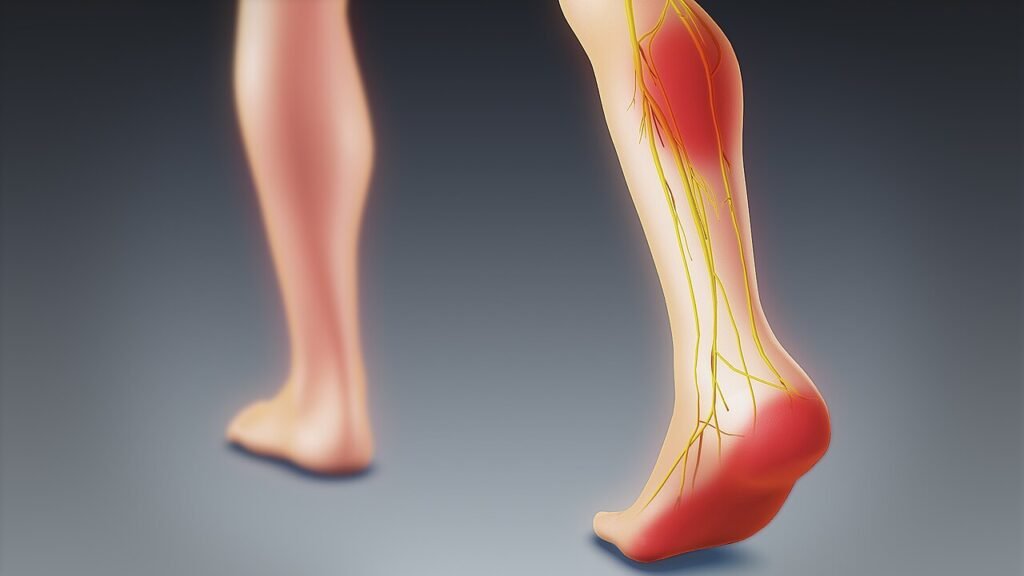
The NHS describes sciatica as sharp or burning pain down the back of one leg, often with pins and needles or numbness, and worse with movement, sneezing or coughing. It names a slipped disc as the most common cause. Cleveland Clinic frames it similarly, saying sciatica comes from a herniated disk or spinal stenosis.
Piriformis syndrome, per the same Cleveland Clinic page, happens when the piriformis muscle presses on the sciatic nerve. The symptoms are pain or numbness in the buttock, hip or upper leg, and they get worse with sitting, walking, running or climbing stairs. Harvard Health makes the same basic point in its page on hip and buttock stretches: a tight piriformis can press on the sciatic nerve.
So the relationship is not either/or. Piriformis syndrome can produce sciatica-type symptoms. What differs is where the pressure on the nerve comes from.
A side-by-side look
| Feature | Sciatica from the spine | Piriformis syndrome |
|---|---|---|
| Source of nerve irritation | Herniated or slipped disc, spinal stenosis | Piriformis muscle pressing on the sciatic nerve |
| Typical location | Down the back of one leg | Buttock, hip or upper leg |
| Sensations named by the sources | Sharp or burning pain, pins and needles, numbness | Pain or numbness |
| What aggravates it | Movement, sneezing, coughing | Sitting, walking, running, stairs |
The table shows differences, but the overlap is bigger than the table suggests. Both can involve numbness. Both can be felt in the leg. And the aggravating factors listed come from different pages that did not set out to compare the conditions head to head.
Why a diagnosis is hard
Cleveland Clinic says there is no specific test for piriformis syndrome, and that a provider may order imaging to rule out other causes. A review in a peer-reviewed journal reaches a similar conclusion: the condition mimics disc-related sciatica and has no reliable diagnostic test. The same review says piriformis syndrome accounts for 5 to 8% of low back pain cases. That is the review’s figure, not a number every source agrees on, so treat it as an estimate.
The practical consequence is that if you have buttock pain that runs down the leg, you cannot tell reliably from the couch which version you have. Someone with a disc problem and someone with a tight piriformis can describe nearly the same pain.
What brings each one on
Cleveland Clinic describes the piriformis as a flat, narrow muscle running from the lower spine through the buttock to the top of the thigh, with the sciatic nerve typically passing underneath it. The page ties piriformis syndrome to inflammation, spasm or scarring after hip, buttock or leg injuries, tight muscles from inactivity, improper lifting, too little warm-up or stretching afterward, overexercising and prolonged sitting. Abnormal anatomy can also be responsible.
The NHS lists slipped disc, spinal stenosis, spondylolisthesis and back injury as causes of sciatica. On duration, it says sciatica usually gets better in a few weeks to a few months but can last longer and can come back. Cleveland Clinic says piriformis symptoms typically resolve in days or weeks with conservative treatment, though recurrence is common if you stop following the guidelines.
What the sources suggest for self-care
For sciatica, the NHS advice is to stay mobile and use heat packs. Cleveland Clinic lists a range of treatment options for piriformis syndrome, in rough order: rest, exercises, over-the-counter anti-inflammatory medicine, physical therapy, massage, muscle relaxants, injections, and surgery as the last resort. It gives a knee-to-chest stretch held for 5 to 30 seconds as an example.
Those are options from a clinical overview, and not a plan to follow without an assessment. If a stretch makes numbness or leg pain worse, it is the wrong stretch for you. For stretching in general, a post on using a stretching strap for the hamstrings covers the equipment side, and one on massage guns and sciatica covers what to think about before putting percussion on a painful area.
One more practical point: because the pain pattern alone does not settle the question, keep a short note of where it hurts, what sets it off and whether the leg is numb or weak. A provider can use that history alongside an examination, and imaging if needed, to decide where the nerve pressure is coming from.
Red flags: when to call a professional or emergency services
The NHS is direct. Call 999 or go to A&E for sciatica in both legs, severe weakness in both legs, numbness around the genitals, or loss of bladder or bowel control. In the US, the equivalent is calling 911 or going to an emergency department. The NHS also says to see a GP if sciatica has not improved after several weeks.
Cleveland Clinic gives its own list for piriformis syndrome. See a provider if you have:
- frequent falls,
- pain that lasts for weeks even though you are following instructions,
- bowel or bladder problems,
- sudden severe pain or sudden weakness,
- pain after trauma,
- or difficulty lifting the foot.
Bowel or bladder changes appear on both lists, and they are the ones not to sit on.
Our take
Treat sciatica as a symptom and piriformis syndrome as one of several possible causes. Because the sources say no reliable test separates them, a clinician is the way to find out. Go straight to emergency care for loss of bladder or bowel control, genital numbness, or severe weakness in both legs.
Common questions about piriformis syndrome and sciatica
Is piriformis syndrome the same as sciatica?
No. Sciatica is the pain along the sciatic nerve. Piriformis syndrome is one possible cause, where the piriformis muscle presses on the nerve. Cleveland Clinic and the NHS both name a herniated or slipped disc as a more typical cause of sciatica.
Can I tell which one I have at home?
Not reliably. Cleveland Clinic says there is no specific test for piriformis syndrome, and a published review notes it mimics disc-related sciatica.
What makes piriformis syndrome worse?
Cleveland Clinic lists sitting, walking, running and climbing stairs.
When is sciatica an emergency?
The NHS says to call 999 or go to A&E for sciatica in both legs, severe weakness in both legs, numbness around the genitals, or loss of bladder or bowel control.
From the Relief for Body desk
Every guide here is built from the manufacturer’s own documentation, published safety guidance, and the pattern in what owners report over months of use, not from a lab or a clinic. Nothing is sponsored, and verdicts are settled before any affiliate link goes in. We are not clinicians, and nothing on this site replaces one. How we review explains the process.
This article is general information, not medical advice. If pain is sharp, persistent, or getting worse, see a clinician.
Google lets you pick which sites come up first in your own results.