Relief for Body is reader-supported. When you buy through links on our site, we may earn an affiliate commission. This doesn't affect our verdicts.
Gentle movement is what the major medical sources recommend for sciatica, not bed rest. Cleveland Clinic names four example exercises that a physical therapist may teach: bridging, cat-cow, knee-to-chest and a lower back extension. The red flags matter as much as the stretches: loss of bladder or bowel control, numbness around the genitals or anus, and severe or worsening weakness in both legs call for urgent care, not exercise.
What sciatica is, and what the sources say about moving
MedlinePlus describes sciatica as a symptom of a problem with the sciatic nerve, with pain, weakness, numbness or tingling that can run from the lower back down the leg, usually on one side. AAOS OrthoInfo adds that the pain can feel like a sharp or electric shock and may get worse when you move, sneeze or cough.
On activity, the sources agree. The NHS sciatica page says not to sit or lie down for long periods, and that even if moving hurts, it is not harmful and can help you get better faster. AAOS says to keep moving rather than stay in bed, since too much rest may cause discomfort in other parts of the body, and that motion helps reduce inflammation. Cleveland Clinic allows short periods of rest in the first day or two, then warns that too much rest may make pain worse and slow recovery.
The exercises named in the guidance
Most pages that mention exercise for sciatica stay vague. Of the sources read for this article, Cleveland Clinic is the one that describes specific movements, as examples of what a physical therapist may teach for the office and for home. AAOS says to start stretching exercises early without naming them, and the NHS back pain page points to exercises and stretches without listing them. Here is what Cleveland Clinic describes.
| Exercise | How Cleveland Clinic describes it |
|---|---|
| Bridging | Lie on your back, knees bent, feet flat. Tighten your belly and squeeze your butt muscles. Lift your hips until your body forms a straight line, hold for a few seconds, then slowly lower your hips. |
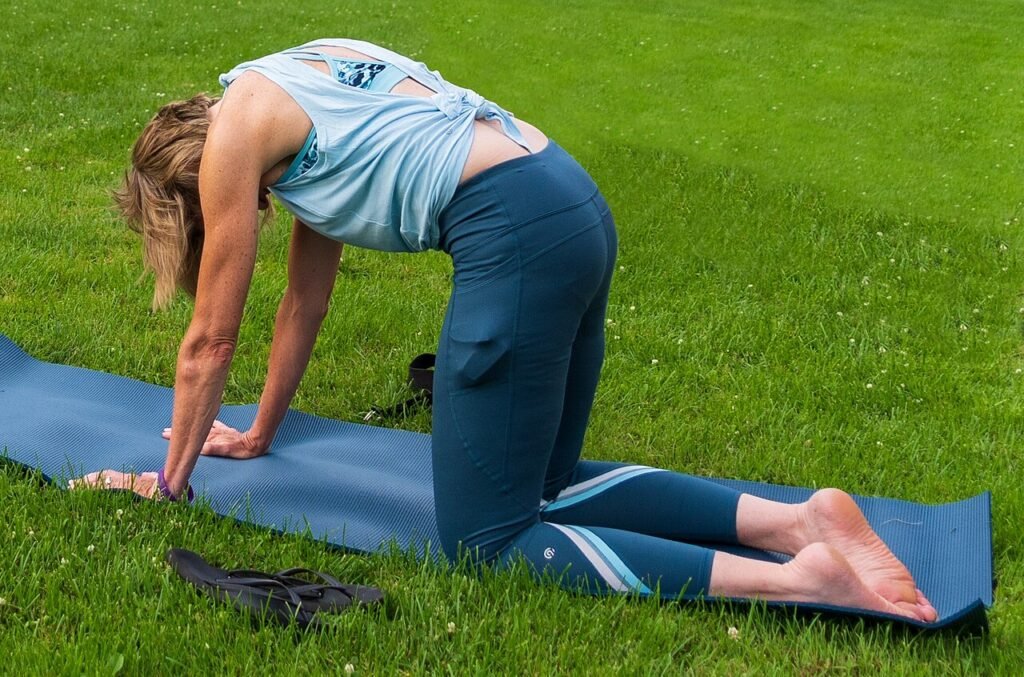
| Cat-and-camel (cat-cow) | On hands and knees, hands under shoulders, knees under hips. Slowly round your back toward the ceiling, then let your belly drop and lift your chest and tailbone. Move slowly. |
| Knee-to-chest | Lie on your back and bring one knee toward your chest until you feel a gentle stretch. Lower the leg and switch sides. |
| Lower back extension | Lie on your stomach with hands under your shoulders (push-up position). Keep your hips relaxed on the floor and gently press up to lift your chest, arching the lower back slightly. Slowly lower your chest. |
These are examples, not a prescription. Cleveland Clinic frames them as exercises a therapist shows you how to perform safely. The only timing Cleveland Clinic gives is to hold the bridge for a few seconds. No source I read gives other hold times or repetition counts, so none are given here. Whether the extension movement suits you depends on what is behind your symptoms, which is a judgment a clinician makes after an exam.
How to do them without making things worse
The sources give a few practical guardrails. The NHS back pain guidance says there are specific exercises and stretches for back pain, but to stop if your pain gets worse and see a GP for advice. Cleveland Clinic says not to push through back pain, and to choose low-impact activity such as walking, swimming or yoga when needed.
A reasonable approach built from that advice is to start with the gentlest movement, keep the range small, and notice how your leg feels afterward. A stretch that sends pain further down the leg, or that leaves you worse the next day, is a reason to stop and ask a clinician. That reading comes from the stop-if-worse instruction, not from a rule any source spells out.
What to avoid
The clearest thing to avoid is staying still. The NHS says do not sit or lie down for long periods, and AAOS says not to remain in bed. The NHS also suggests sitting correctly when using a computer. Our lower back stretches guide covers the wider set of back movements.
The sources do not give a list of banned stretches, and it would be wrong to invent one. What they say is to stop an exercise that makes pain worse, and not to push through it.
Heat and ice are the other thing the sources mention. The NHS suggests heat packs on the painful areas, and Cleveland Clinic says ice may help with pain and swelling in the first few days and heat afterward, for about 20 minutes at a time. For the general picture, see heat versus cold therapy. If you are wondering about percussion tools, using a massage gun for sciatica looks at that separately.
Red flags and when to see a doctor
The NHS says to go to A&E or call emergency services if you have sciatica on both sides; weakness or numbness in both legs that is severe or getting worse; numbness around or under the genitals or around the anus; trouble starting to pee, being unable to pee, or being unable to control it when that is not normal for you; or not noticing when you need to poo or being unable to control it. It says not to drive yourself. The NHS is a UK source, so in the United States the equivalent is calling 911 or going to an emergency room.
Cleveland Clinic lists muscle weakness, loss of bladder control and loss of bowel control among the serious symptoms, and says moderate to severe pain, numbness, tingling or muscle weakness needs medical care.
For ordinary sciatica, the NHS says to see a doctor if the pain has not improved after trying home treatment for a few weeks, is getting worse, or is stopping you doing normal activities. AAOS notes that surgery may be considered if disabling leg pain persists after 3 or more months of nonsurgical treatment.
What recovery looks like
No source promises a result from stretching alone. AAOS says approximately 80 to 90 percent of people with sciatica get better without surgery over time. The NHS says sciatica usually gets better in a few weeks to a few months but can last longer, and can return. Cleveland Clinic says many cases improve within four to six weeks without medical treatment, and that more severe cases may take longer. Exercise is part of how people manage that stretch of time, not a cure.
Our take
Keep moving, keep it gentle, and stop anything that makes your leg pain worse. Bridging, cat-cow, knee-to-chest and a gentle lower back extension are the four examples Cleveland Clinic gives, and a physical therapist can tell you which ones fit your cause. Do not wait out the red flags: bladder or bowel changes, numbness around the genitals or anus, or severe weakness in both legs mean going to the emergency room right away. If ordinary sciatica has not eased after a few weeks of home care, book an appointment.
Common questions about sciatica stretches and exercises
Should I rest or exercise with sciatica?
Both the NHS and AAOS advise staying active and avoiding long periods in bed or sitting. Cleveland Clinic says a day or two of short rest may help, but too much rest may slow recovery.
Which stretches does Cleveland Clinic name for sciatica?
Bridging, cat-and-camel (cat-cow), knee-to-chest and lower back extension, as examples a physical therapist may teach for the office and for home.
Is it harmful if moving hurts?
The NHS says that even if moving hurts, it is not harmful and can help you get better faster. Its back pain guidance also says to stop an exercise if your pain gets worse and to see a doctor for advice.
What symptoms mean I should go to the emergency room?
Per the NHS: sciatica on both sides, severe or worsening weakness or numbness in both legs, numbness around the genitals or anus, and loss of bladder or bowel control that is not normal for you.
How long does sciatica last?
The NHS says a few weeks to a few months, sometimes longer. Cleveland Clinic says many cases improve within four to six weeks. See a doctor if it has not improved after a few weeks of home care.
From the Relief for Body desk
Every guide here is built from the manufacturer’s own documentation, published safety guidance, and the pattern in what owners report over months of use, not from a lab or a clinic. Nothing is sponsored, and verdicts are settled before any affiliate link goes in. We are not clinicians, and nothing on this site replaces one. How we review explains the process.
This article is general information, not medical advice. If pain is sharp, persistent, or getting worse, see a clinician.
Google lets you pick which sites come up first in your own results.