Relief for Body is reader-supported. When you buy through links on our site, we may earn an affiliate commission. This doesn't affect our verdicts.
A foam roller for big muscle groups, a resistance band for shoulders and hips, a small massage ball for stubborn spots a roller can’t reach, and a stretching strap for anyone whose hamstrings won’t cooperate: those four cover almost everything most people need, and none of them cost much on their own.
The harder part isn’t picking a tool. It’s knowing which one actually matches the tightness you’re dealing with, since a foam roller and a massage ball solve different problems even though they get lumped together in the same aisle.
What does a foam roller help with?
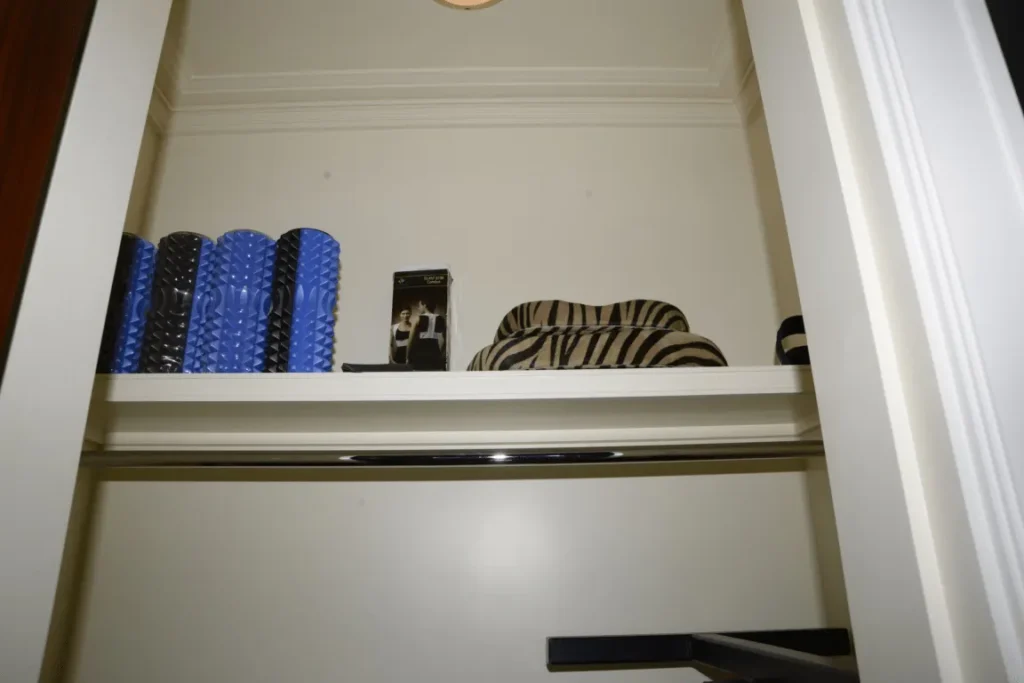
A foam roller works best on large, flat muscle areas: quads, calves, the outer hip, the upper back along either side of the spine. You roll your body weight over it slowly, pause on the tighter spots, and move on. It’s a broad tool, not a precise one, which is exactly why it doesn’t do much for something small and specific like a knot between the shoulder blade and spine.
Density matters more than most first-time buyers expect. A soft roller feels gentler and is easier to tolerate for anyone new to rolling, while a firm one applies more pressure for the same amount of body weight. Our foam roller density guide breaks down which firmness fits which experience level in more detail.
What’s a massage ball for, and how is it different?
A lacrosse ball or a purpose-made massage ball concentrates pressure into a small area, which is what makes it useful for a glute, a spot under the shoulder blade, or the arch of a foot: spots a roller glides right past. The trade-off is control: a ball digs in harder for the same body weight, so it’s easy to overdo it on a first try, especially against a wall where more of your weight transfers directly into the small contact point.
Some people keep two: a slightly softer rubber ball for general use and a harder lacrosse-style ball reserved for spots that need more direct pressure.
What do resistance bands add here?
Bands aren’t a rolling or pressure tool at all; they’re for building strength and range of motion around a joint, which is a different job from working on tight tissue. A light band looped around the feet or anchored to a door is enough for shoulder external rotation work, hip abduction drills, or assisted stretching where the band takes some of your body weight. For anyone whose mobility issue is more “this joint feels unstable” than “this muscle feels tight,” a band usually does more than another roller would.
Bands are sold by resistance level, typically color-coded, and a set with three or four levels covers most home use without needing to guess at a single band’s strength. Straps and bands get confused constantly, since both are long, stretchy and live in the same drawer, so we separated them properly in stretching strap versus resistance band.
When does a stretching strap help?
A stretching strap is a length of fabric with loops sewn along it, used to extend your reach into a stretch you can’t otherwise hold with your hands, most commonly a hamstring or calf stretch lying on your back. It’s a narrow-use tool. If hamstring or calf tightness isn’t a regular issue, a strap is one of the easier items to skip, since a towel or a long belt does roughly the same job for occasional use.
For anyone stretching daily as part of a routine, though, a dedicated strap holds its shape better over time than an improvised towel does, and the loops make it easier to adjust your grip mid-stretch without losing position.
How do these tools compare side by side?
| Tool | Best for | Not great for | Price range |
|---|---|---|---|
| Foam roller | Large muscles: quads, calves, back | Small, specific spots | $15–$40 |
| Massage ball | Glutes, feet, under shoulder blades | Broad muscle groups | $8–$20 |
| Resistance band | Joint strength, assisted stretching | Deep tissue tightness | $10–$25 per set |
| Stretching strap | Hamstring and calf stretches | Anything not a leg stretch | $8–$15 |
Verdict
Start with a medium-density foam roller and a massage ball. Add a resistance band if joint stability is the actual issue, and a strap only if hamstring stretches are a regular habit.
What should you buy?
TriggerPoint GRID Foam Roller
A solid, medium-firmness roller that holds up well over years of regular use.
- Hollow core keeps it lighter and more packable than solid foam rollers
- Textured surface for slightly more targeted pressure than a smooth roller
- Typically in the $30–$40 range
RAD Rounds Massage Ball Set
Three densities in one set, so you can work up from soft to firm on the spots that need it.
- Sized for one muscle at a time, unlike a roller that spreads the pressure along a whole limb
- Meant for deep tissue and myofascial work rather than a general warm-up
- 4.6 across more than 1,700 reviews
WODFitters Resistance Band Set
A multi-level band set that covers everything from light assisted stretching to heavier strength work.
- Four resistance levels included, color-coded
- Comes with a door anchor, useful for banded shoulder and hip drills at home
- Typically $15–$25 for the full set
OPTP Stretch Out Strap
A simple, sturdy strap with enough loops to adjust for different leg lengths and stretch depths.
- Loops spaced along its length, so you shorten or lengthen by moving your grip a notch
- Comes with the printed exercise book, which is most of why people pick this over a plain strap
- 4.7 across more than 27,000 reviews
How often should you use these?
Daily use is common for foam rolling and stretching, usually 5 to 10 minutes, often before or after a workout rather than as a standalone routine. Resistance band work tends to happen 2 to 3 times a week as part of a broader strength or mobility session, since it’s closer to light exercise than a quick tension release. Our guide to foam rolling frequency goes into more detail on building a rolling habit without overdoing it.
Should you get a vibrating or heated version instead?
Vibrating foam rollers and massage balls exist and cost noticeably more, usually two to three times a standard roller’s price, for an added buzz that some people find helps them relax into a spot faster. Whether that’s worth the premium is genuinely a personal call; plenty of people get the same result from a plain roller and more time spent on the tight spot. If budget is a factor, a standard roller and a bit more patience gets you most of the way there.
How do these tools fit next to a massage gun?
A massage gun does a version of what a massage ball does, with a motor doing the work instead of your body weight, and it reaches spots like the upper back more easily since you’re not lying on the floor to use it. It doesn’t replace a foam roller for broad muscle coverage, though, and it costs a lot more than a roller-and-ball combo. Our massage gun buying guide covers what to look for if you’re deciding whether to add one to the mix.
For anyone building out a fuller recovery kit rather than just a mobility one, it’s worth looking at the wider picture in our athletic recovery gear guide, which ranks tools by cost against how much they typically get used.
How much should a starter kit cost?
A foam roller and a massage ball together usually land under $50, and that combination alone covers most of what a person new to mobility work will reach for in the first few months. Adding a resistance band set brings the total closer to $65-$75, still well short of what a single premium massage gun costs on its own. A stretching strap is close to a rounding error on top of that, often under $12.
There’s rarely a good reason to buy the most expensive version of any of these four tools first. A mid-range foam roller from a known brand and a basic set of bands will outlast most people’s actual usage habits, and it’s easier to justify an upgrade later once you know which tool you reach for the most.
Do cheaper, off-brand versions work just as well?
For a foam roller and a massage ball, mostly yes. The physics of applying pressure to a muscle doesn’t change much between a $15 no-name roller and a $40 branded one; the differences show up in how long the foam holds its shape under regular use and how the surface texture feels. A cheaper roller that goes soft and loses its shape after a few months isn’t a bargain if it needs replacing twice as often.
Resistance bands are the one category where quality gaps show up faster. A thin, poorly made band is more likely to snap under tension, which is a real safety concern when it’s stretched near your face during a shoulder drill. Spending a bit more for a reputable brand matters more here than it does for a roller.
What about areas these tools don’t reach well?
The neck and the small muscles around the shoulder blades are awkward for all four of these tools. A foam roller is too broad and too rigid for the neck specifically, and lying on a massage ball at that angle can put uncomfortable pressure on the spine rather than the muscle beside it. Most people are better off using a warm shower, a light self-massage with the hands, or, if discomfort is persistent, checking in with a healthcare provider rather than trying to force a mobility tool into a spot it wasn’t really designed for.
How should a beginner build a routine?
Ten minutes, three or four times a week, beats an ambitious daily plan that gets abandoned after eight days. A simple starting routine looks like two minutes on each thigh with the roller, a minute on each glute with the ball, and a couple of banded hip or shoulder drills to close it out. Consistency does more for how a body feels over a month than any single tool choice does.
It’s also fine to start with just one tool. Adding the roller first and seeing how often it gets used is a better test than buying all four at once and letting three of them sit in a drawer. Keeping it near the couch or the bed, somewhere it’s visible during downtime, tends to matter more for using it than any feature of the roller itself.
Frequently asked questions
Do you need all four mobility tools, or just one?
Most people get the most value from a foam roller and a massage ball first, since those cover the widest range of everyday tightness. Bands and straps solve narrower problems and are easy to add later if a specific need shows up.
Is a firmer foam roller always better?
Not necessarily. A firmer roller applies more pressure for the same body weight, which some people find too intense, especially early on. A medium-density roller is a safer starting point than the firmest option on the shelf.
Can resistance bands replace stretching?
Not really. Bands are mainly a strength and joint-stability tool, and assisted stretching with a band is only one small part of what they’re used for. A strap or plain body-weight stretching still covers most flexibility work on its own.
What’s the single best mobility tool to start with?
For most people, a medium-density foam roller is the best first purchase, since it covers the widest range of common tight spots: quads, calves, and the back. A massage ball is a close second for anyone whose tightness tends to sit in the glutes or feet.
None of these tools need to be expensive or complicated to be useful. A roller, a ball, and 10 minutes most days does more for most people than a drawer full of gear that only gets used twice. If something feels sharp, numb, or wrong in a way that goes beyond ordinary muscle tightness, that’s a cue to stop and check with a healthcare provider rather than push through it with a tool.
From the Relief for Body desk
Every guide here is built from the manufacturer’s own documentation, published safety guidance, and the pattern in what owners report over months of use, not from a lab or a clinic. Nothing is sponsored, and verdicts are settled before any affiliate link goes in. We are not clinicians, and nothing on this site replaces one. How we review explains the process.
This article is general information, not medical advice. If pain is sharp, persistent, or getting worse, see a clinician.
Google lets you pick which sites come up first in your own results.