Relief for Body is reader-supported. When you buy through links on our site, we may earn an affiliate commission. This doesn't affect our verdicts.
Buy a percussion massager first. It costs less, works on a wider range of situations, and doesn’t need a dedicated 20 minutes of sitting still the way compression boots do. Compression boots are worth adding once you’re training hard enough, or standing on your feet long enough, that whole-leg recovery is a regular need rather than an occasional one.
Both tools are covered in more depth in our massage gun buying guide and our athletic recovery gear guide, and the two get compared a lot because they occupy a similar price bracket once you’re looking at the better massage guns.
How Much Setup Does Each One Need?
A massage gun is ready in seconds. Pick it up, pick a speed, and start. There’s no setup involved beyond charging it occasionally, which makes it easy to fit into a short break between meetings or right after a workout without planning ahead.
Compression boots need a bit more commitment. You have to put them on correctly, connect them to the control unit, and then sit still for the full session, since getting up partway through interrupts the cycle. For someone with a packed schedule, that fifteen-to-thirty-minute block of sitting still can be the bigger barrier to using them regularly, even if the boots themselves would help.
What Do These Tools Do Differently?
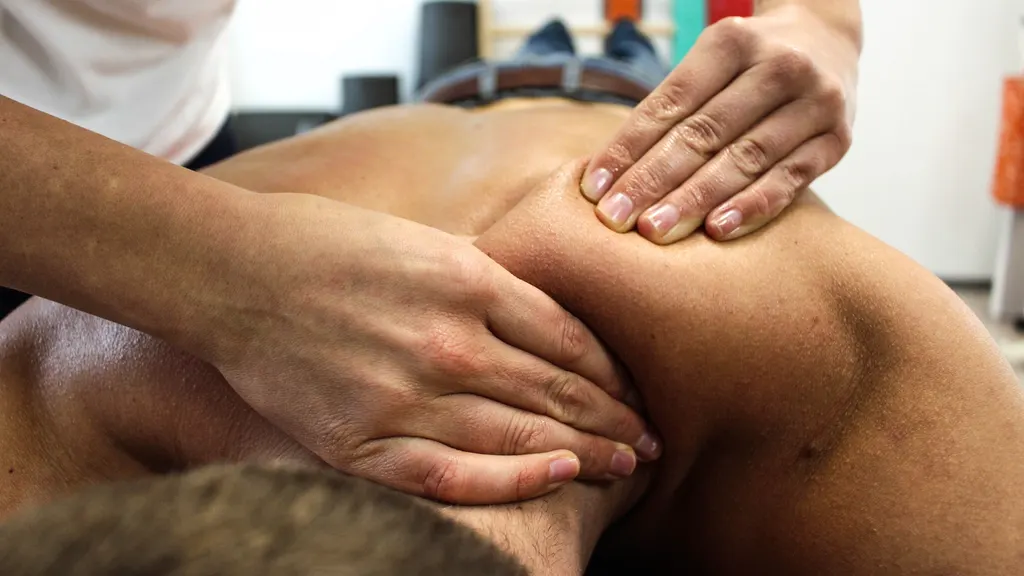
A massage gun delivers targeted, rapid pressure to one small area at a time. You move it yourself, spending 30 to 90 seconds on a spot before shifting to the next one. It is quick, and it fits into a five-minute break.
Compression boots work the opposite way. You put them on, sit down, and let sequential air chambers squeeze your legs from ankle to thigh in a wave-like pattern, usually for 15 to 30 minutes at a stretch. There’s no targeting involved. It’s a whole-leg session, not a spot treatment.
Percussion Massager vs. Compression Boots
| Factor | Percussion massager | Compression boots |
|---|---|---|
| Typical price range | Budget to mid-range | Mid-range to premium |
| Session length | 5–15 minutes, targeted | 15–30 minutes, whole leg |
| Coverage | Specific spots, upper or lower body | Legs only, ankle to thigh |
| Manual operation | Yes, you move it yourself | No, sit and let it run |
| Portability | Compact, fits in a bag | Bulkier, needs storage space |
| Best for | Everyday tightness, quick sessions | Heavy leg training, long shifts on your feet |
Who Should Buy a Massage Gun First?
Almost everyone starting out. It’s the more versatile purchase, useful for a sore shoulder from a desk job just as much as tight calves after a run. It’s also the tool you’ll reach for on a random Tuesday, since it doesn’t require setting aside half an hour to sit still.
For people dealing with general lower-back or leg discomfort tied to long hours on their feet, a massage gun is also a reasonable lower-commitment starting point before considering boots. If sciatic-type leg discomfort is part of the picture, our piece on products people with sciatica discomfort tend to buy covers that ground more specifically.
Who Should Buy Compression Boots First?
People training legs hard and often: runners in a marathon build, cyclists, anyone doing back-to-back heavy leg days. The whole-leg, sequential squeeze does something a massage gun’s targeted pressure doesn’t, and the appeal is exactly that it doesn’t require you to know which spot is tightest.
Nurses, retail workers, and anyone else on their feet for long shifts also gravitate toward boots for the same reason. It’s a “put them on and do something else” recovery session rather than an active one.
What Should You Look for at Each Price Point?
On the massage gun side, entry-level models usually cut back on stall force, the amount of pressure the motor can handle before it bogs down, and on noise insulation. That’s fine for someone using it a few times a week on light soreness, but anyone dealing with denser muscle, like the quads or glutes, tends to notice the difference quickly. Mid-range models close that gap with a stronger motor and quieter housing, without jumping to the premium price bracket.
Compression boots are less forgiving at the low end. Cheaper models often skip true sequential compression, meaning the whole boot inflates at once rather than in a wave from ankle to thigh, which is most of the point of the product. If sequential compression isn’t listed clearly in the specs, it’s worth assuming the boots don’t have it.
Can You Use Them Together?
Plenty of people who train seriously end up owning both, and they’re not redundant once you’re using them for different things. A massage gun works well as a quick pre-training warm-up or a same-day fix for one tight spot. Compression boots are more of an end-of-day or rest-day recovery session, something you do once you’re done moving for the day rather than in between activities. Neither one replaces needing both if your training volume is high enough to justify it, but starting with a massage gun and adding boots later is a reasonable way to spread out the cost.
Theragun Prime
A reasonable first purchase for most people, versatile enough for everyday use.
- Multiple speed settings for different sensitivity levels
- Interchangeable heads for different muscle groups
- Quiet enough for use in a shared space
Hyperice Normatec 3
The more established name in compression boots, worth the investment once leg recovery is a regular need.
- Sequential compression pattern covers the whole leg
- Adjustable pressure levels through a companion app
- Popular with runners and people on their feet all day
Verdict
Massage gun first, almost always. Add compression boots once your legs are the specific bottleneck, whether that’s training volume or hours spent standing.
If budget is the deciding factor rather than which tool fits your routine, our look at whether recovery boots are worth the price goes deeper into whether the investment makes sense for your situation.
Frequently asked questions
Are compression boots better than a massage gun?
They’re not directly comparable in what they do. A massage gun targets specific spots quickly, while compression boots work the whole leg passively over a longer session.
Do I need both a massage gun and compression boots?
Not necessarily. Most people get more everyday use out of a massage gun, and add boots later if leg training or standing all day becomes a bigger part of their routine.
Are compression boots worth the price for a casual gym-goer?
Usually not as a first purchase. The cost tends to make more sense for people training legs heavily or spending long shifts on their feet.
Can a massage gun be used on legs the same way as compression boots?
It can target sore spots on the legs, but it won’t replicate the whole-leg, sequential compression that boots are built for.
For the fuller lineup of recovery gear worth considering beyond these two, our athletic recovery gear guide ranks the main categories by cost against how much they help, and our massage gun buying guide covers the rest of the field if a percussion massager is where you land.
From the Relief for Body desk
Every guide here is built from the manufacturer’s own documentation, published safety guidance, and the pattern in what owners report over months of use, not from a lab or a clinic. Nothing is sponsored, and verdicts are settled before any affiliate link goes in. We are not clinicians, and nothing on this site replaces one. How we review explains the process.
This article is general information, not medical advice. If pain is sharp, persistent, or getting worse, see a clinician.
Google lets you pick which sites come up first in your own results.