Relief for Body is reader-supported. When you buy through links on our site, we may earn an affiliate commission. This doesn't affect our verdicts.
A massage gun is a handheld device that drives a small head in and out against a muscle, dozens of times a second, to loosen tight tissue and take the edge off soreness. If you sit at a desk all day, lift on weekends, or just carry tension in your shoulders, a good one costs less than a nice dinner and lives in a drawer until you need it. A bad one is loud, heavy, and dead within a year. This guide covers what actually separates the two, and which ones we’d point a friend toward.
We’re not doctors, and a massage gun isn’t a device that fixes anything structural. It’s a comfort tool, the kind of thing you reach for after a long drive or a hard leg day, not instead of seeing someone about a real injury. With that said, a few things separate a useful one from a loud one.
What does a massage gun do?
The motor drives a shaft in and out at a set number of strokes per minute, usually somewhere between 1,750 and 3,200. That’s the percussion part. A rubber or foam head sits on the end of the shaft and makes contact with the muscle. The stroke length, called amplitude, is what people feel. A short, buzzy stroke feels like a vibrating phone against your skin. A longer stroke, generally 10mm to 16mm, feels like a firm knuckle working into the tissue.
One spec matters more than the marketing suggests: amplitude, not top speed, drives how deep a gun feels. Stall force, meaning how much resistance the motor can push through before it bogs down, matters more than either spec for whether the thing holds up on a tense calf or a dense trap muscle instead of stuttering to a stop.
How do you pick the right one for you?
Start with what you’re trying to do with it. Loosening a stiff neck after a day of screens calls for something different than working over quads before a run.
Amplitude and stall force
For general use, shoulders, calves, a tight lower back, look for 12mm to 16mm of amplitude and a stall force somewhere in the 40-to-60-pound range. Much lower than that and the device starts feeling like a toy the moment you push it into a real knot instead of skin-deep muscle.
Noise
This trips people up constantly. A gun labeled “quiet” on the box can still be loud enough to draw looks in a shared office or wake a partner in the next room. Real-world dB output varies more by model than manufacturers admit. If noise is a dealbreaker for you, our roundup of quiet massage guns for apartments and shared offices goes deeper on which models stay under the radar.
Weight and grip
Anything under 2 pounds is easy to hold against your own back for more than a minute. Past 2.5 pounds, your arm gets tired before your muscle does, especially reaching around to a shoulder blade. If you’re buying one for a partner to use on you, weight matters a lot less, since they’re the one doing the holding.
Battery life and attachments
Most decent guns run 2 to 6 hours per charge, which is plenty for home use between charges. Attachment heads are mostly interchangeable in effect: a round ball head for big muscle groups, a flat head for general use, a bullet head for pinpoint spots like the arch of a foot or between the shoulder blades, and a fork head for either side of the spine, used carefully and never directly on the spine itself.
What are the different types of massage guns?
Not every model on the shelf is built for the same job, and the category has split into a few rough tiers over the past few years.
Mini guns
Pocket-sized, usually under a pound, and built for travel or quick touch-ups rather than a full session. Stall force is almost always lower here, so a mini gun tends to disappoint anyone expecting deep-tissue pressure. Fine as a second device, a rough choice as your only one.
Standard guns
This is where most buyers land, and where most of the useful spec range described above applies. Enough stall force for real muscle groups, a battery that lasts a session or two, a manageable weight.
Pro or app-connected guns
Higher stall force, sometimes a screen or app that tracks pressure and suggests routines. Genuinely nice if you’re training seriously or working with a therapist who wants usage data. For most people managing everyday tightness, this tier is paying for polish more than function.
Verdict
If you only remember one number, remember amplitude. A gun with 16mm of stroke and modest speed will outperform a loud, fast one that barely moves the head at all.
Who should be careful with one, or skip it entirely?
Massage guns aren’t for everyone. People with blood clotting disorders, recent fractures, varicose veins, or a pacemaker are generally advised by manufacturers and physical therapists to avoid percussive devices, or to check with a doctor before using one. Never run a massage gun directly on a joint, the spine, the front of the neck, or anywhere already swollen, bruised, or numb. If something feels sharp or wrong, stop using it. This is a comfort and recovery tool, not a treatment, and it isn’t meant to replace a conversation with a healthcare provider about a real issue.
What should you expect to spend?
Budget models start under $40 and can genuinely work fine for occasional use, though they tend to run louder and hold a shorter charge. The sweet spot for most people sits in the $60 to $120 range, where amplitude and stall force start catching up to premium models. Past $200 or so, you’re mostly paying for a recognizable name, app connectivity, and marginally quieter motors, which is nice but rarely the difference between a good massage and a bad one. For a closer look at where that lower price band tops out, see our roundup of the best massage guns under $100.
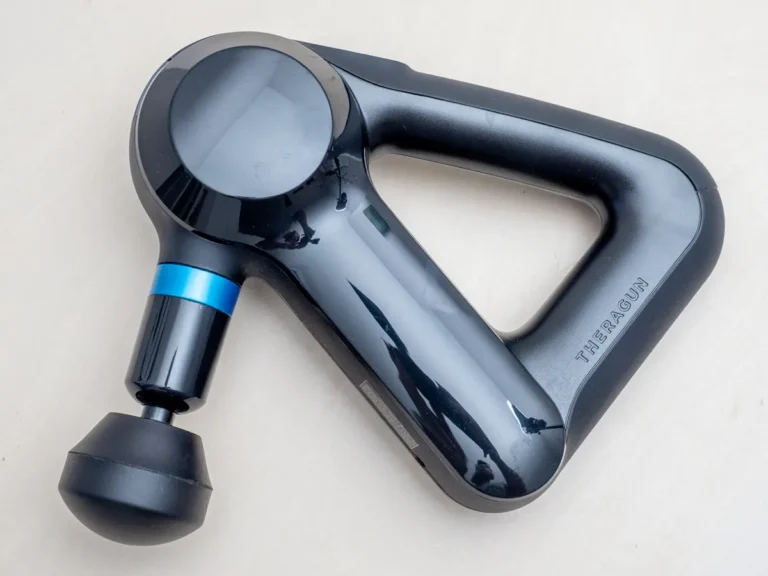
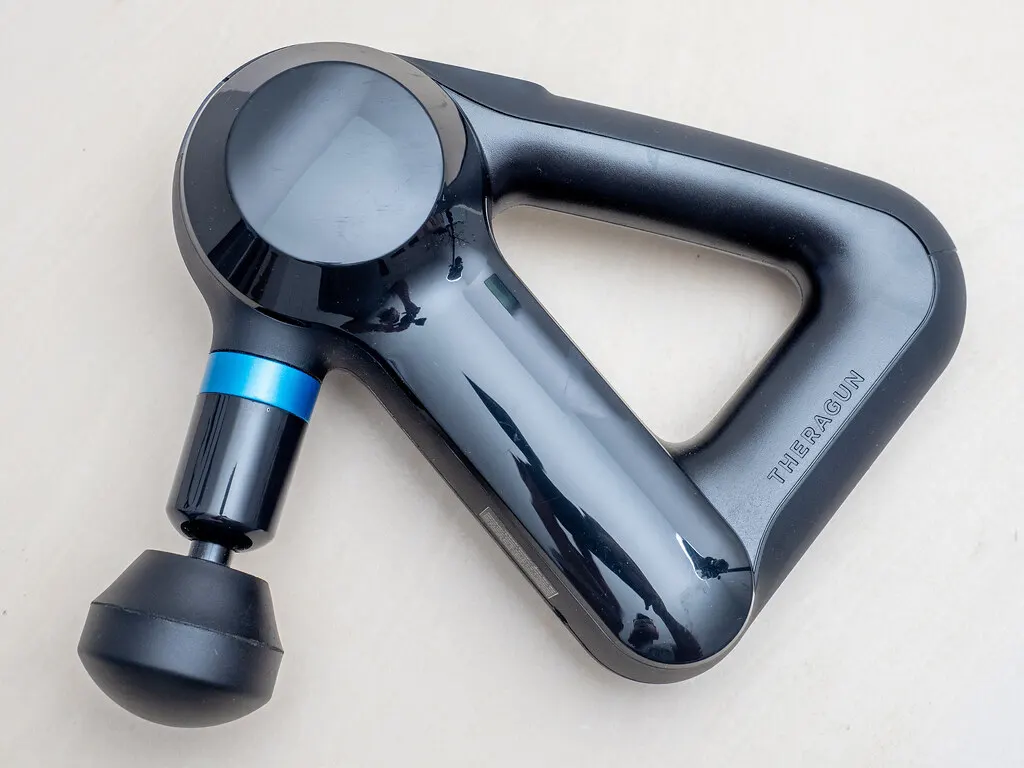
Theragun Prime
The name most people already know, and a solid middle-ground pick for that reason.
- 16mm amplitude, quieter than Theragun’s earlier generations
- Ergonomic multi-grip handle, easier to reach your own back
- Mid-range price, usually in the $200 to $300 range
Renpho Massage Gun
A budget-friendly option that shows up constantly in “best under $100” roundups, for good reason.
- Reasonable stall force for the price tier
- Comes with a case and multiple heads out of the box
- Typically under $60
Hypervolt Go 2
A lighter, quieter option worth considering if portability matters more than raw power.
- Compact build, easy to toss in a gym bag or carry-on
- Runs quieter than most guns in its weight class
- Lower stall force than full-size models, so it suits lighter work
How does it compare to other recovery tools?
| Tool | Best for | Price range |
|---|---|---|
| Massage gun | Targeted spots, quick sessions, portable use | $40 to $300 |
| Foam roller | Larger muscle groups, warm-ups, no batteries needed | $15 to $50 |
| Compression boots | Full-leg recovery after long training sessions | $200 to $700 |
| Heating pad | Passive comfort, desk-bound stiffness | $15 to $60 |
None of these tools really replace the others. Most people who get serious about recovery end up owning two or three rather than settling on one. Our guide to stretching and mobility tools breaks down when a roller makes more sense than a gun, and our athletic recovery gear guide ranks the whole category by cost-to-benefit if you’re building out a kit from scratch. A TENS unit belongs in that comparison too, since it works on an entirely different mechanism and suits a lingering ache better than percussion does, and TENS unit versus massage gun lays out where each one fits.
Common mistakes first-time buyers make
The biggest one is chasing top speed instead of amplitude, because speed is the number brands print in bold on the box. A gun that hits 3,200 strokes per minute with a shallow 6mm stroke will feel weaker on a real muscle than a slower gun with a longer stroke, even though the spec sheet suggests otherwise.
The second mistake is buying based on how a gun sounds in a marketing video, which is almost always recorded running against a pillow or in a padded room. Ask specifically about tested decibel readings from independent reviewers, not the manufacturer’s own claim, if a quiet motor is a priority.
The third is expecting a heavier device to be a better one. Past a certain point, extra weight just tires out your arm faster without adding meaningful stall force. A 1.5-pound gun with a strong motor beats a 3-pound gun with a mediocre one for almost every use case outside professional training rooms.
Getting the most out of one once you own it
Most physical therapists and manufacturer guides land on the same rough advice: 1 to 2 minutes per muscle group, moving the head slowly rather than pressing hard and holding still. Let the device do the work. Pressing harder doesn’t make the tissue release faster, and it’s a common reason people wake up sorer the next day instead of looser.
Charge it after each use rather than letting it sit dead for weeks, since lithium batteries degrade faster when stored fully empty. Wipe the head down after workouts. It’s a small habit, but skin oil and sweat break down foam attachments faster than most people expect, and a cracked head is usually the first part to fail.
Does the warranty matter?
More than people assume, since the motor is the part most likely to fail first. Look for at least a one-year warranty, and check whether the seller processes returns directly or routes you through the manufacturer, which can take weeks. A gun that dies at month fourteen with no coverage is a common complaint in buyer reviews, and it’s usually the cheapest models that skip a real warranty entirely to hit a lower price point.
Quick buying checklist
- 16mm or more of amplitude if you want it to feel like real pressure, not a phone buzz
- 40 or more pounds of stall force so it doesn’t bog down on tense muscle
Beyond those two specs, the rest comes down to preference: how it feels in your hand, how loud your household will tolerate, and whether it needs to fit in a gym bag.
Frequently asked questions
Is a massage gun worth buying if I just sit at a desk all day?
For a lot of desk workers, yes. Tight traps and a stiff lower back tend to respond well to a few minutes of use in the evening. It won’t fix the posture habits causing the tightness in the first place, so think of it as one part of a broader routine rather than a standalone solution.
How long should a massage gun session last?
Most guidance from physical therapists and manufacturers points to 1 to 2 minutes per muscle group, not sustained pressure held in one spot. Longer isn’t better here. It’s more likely to leave you sore the next day than to speed anything up.
Can a massage gun help with sciatica discomfort?
Some people with sciatica-related discomfort do add a massage gun to their routine, generally used on the glutes and lower back rather than directly along the nerve path. We cover this in more detail, including what to avoid, in our dedicated article on the topic.
Do more expensive massage guns work better?
Past a certain point, not really. A $250 gun with a quieter motor and an app isn’t more effective at loosening a knot than a well-specced $80 model. Our roundup of the best massage guns under $100 covers where that value line sits.
What’s the quietest massage gun for an apartment or shared office?
Noise varies more by model than most people expect, and marketing claims on the box aren’t reliable on their own. We ranked the quietest options we could verify in our guide to quiet massage guns.
If you’re down to two or three models and can’t decide, go with amplitude and stall force first, noise and weight second. Everything else is a nice-to-have. And if a massage gun starts to feel like it’s not enough on its own, that’s usually a sign to look at what’s causing the tightness in the first place, not a sign to buy a stronger motor.
From the Relief for Body desk
Every guide here is built from the manufacturer’s own documentation, published safety guidance, and the pattern in what owners report over months of use, not from a lab or a clinic. Nothing is sponsored, and verdicts are settled before any affiliate link goes in. We are not clinicians, and nothing on this site replaces one. How we review explains the process.
This article is general information, not medical advice. If pain is sharp, persistent, or getting worse, see a clinician.
Google lets you pick which sites come up first in your own results.