Relief for Body is reader-supported. When you buy through links on our site, we may earn an affiliate commission. This doesn't affect our verdicts.
Every percussion massager ships with a handful of interchangeable heads, and most people use exactly one of them, ever. That’s a shame, because the shape of the attachment changes what the device is actually doing to the muscle underneath it. The table below is the short version: match the shape to the job, then read on for why.
| Attachment shape | Common name | What it’s generally for |
|---|---|---|
| Round ball | Standard head | Large muscle groups: quads, glutes, hamstrings |
| Forked, two-pronged | Fork head | Either side of the spine, the Achilles tendon, the neck muscles (not the spine itself) |
| Pointed or bullet-shaped | Bullet head | Small, deep spots: feet, hands, tight knots in a muscle belly |
| Wide and flat | Flat head | Broad flat muscles: chest, upper back, outer thigh |
| Soft, cushioned | Cushion head | Bony or sensitive areas, and anyone new to percussion tools |
| Wedge-shaped | Wedge or scraper head | Shoulder blade edges, IT band |
What does the round ball head actually do?
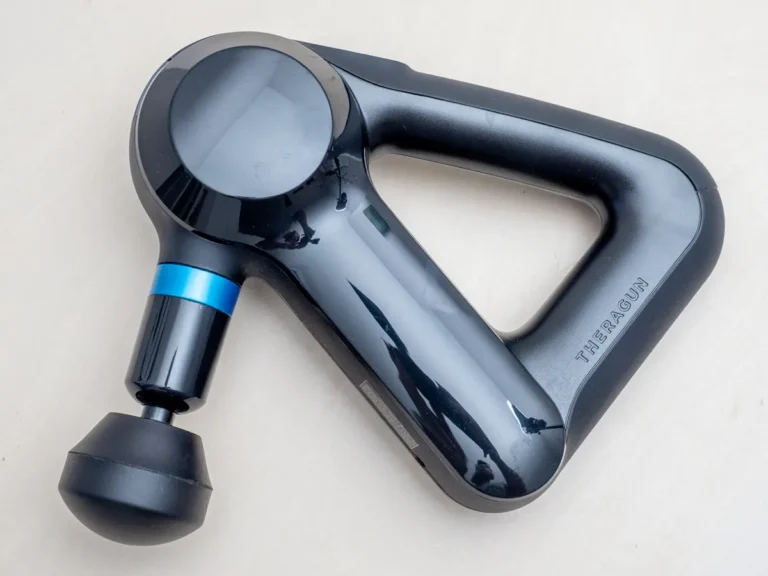
This is the one that comes pre-installed on most devices, and for good reason. Its rounded surface spreads the impact across a wider area, which makes it forgiving on big muscles like the quads or the glutes where precision doesn’t matter much. It’s the head most manufacturer manuals recommend starting with if you’re unsure which to pick.
Part of why it’s the default has to do with how new users tend to behave. Someone unfamiliar with a percussion device often presses harder than intended or lingers too long in one spot. A rounded, larger-surface head absorbs some of that inexperience better than a pointed one would, spreading the same mistake over a wider patch of muscle instead of concentrating it in one place.
It’s a poor choice for small or bony spots. The same roundness that makes it forgiving on a thigh makes it vague and sometimes uncomfortable on a wrist or a shin. For a sense of how this tool stacks up against simpler options, the comparison of a massage gun against a foam roller is worth a look.
What is the fork or U-shaped head for?
The two prongs are built to straddle a bony ridge rather than hit it directly, which is why it shows up in guidance around the spine and the Achilles tendon. The idea is that the muscle on either side of the bone gets the impact while the bone itself sits in the gap between the prongs.
Manufacturer instructions are fairly consistent that this attachment goes beside the spine, never on it. It’s a common point of confusion for new owners, and one worth getting right before using the tool near the back or neck at all.
The Achilles tendon is a slightly different use case from the spine, though the same shape applies. There, the two prongs straddle the tendon itself, running the device along either side of it rather than across the middle, since the tendon has little cushioning of its own.
Why does a bullet or pointed head exist, and is it risky?
A pointed tip concentrates the same motor power into a much smaller contact area, which lets it reach a specific tight spot instead of a general region. It’s the attachment most associated with what people call trigger point work, and it plays a similar role to the pointed tools covered in the general mobility tools guide.
Because it concentrates force, this head is also the one most often flagged in manuals for shorter session times and lower speeds, particularly on the feet, hands, or anywhere close to a joint. Owners who report discomfort after a session most often mention this attachment specifically, usually paired with the highest speed setting and a longer pass than the manual suggests.
What’s a flat head good for?
It is the opposite approach to the bullet head: broad contact, low pressure per square inch, spread over a wide muscle. It tends to show up in reviews as the preferred choice for the chest, the upper back, and outer thigh muscles where a rounder head can feel like it’s missing the spot.
Some owners describe it as the most comfortable head of the set, though comfort here depends heavily on speed setting too.
What is the wedge or scraper head for?
Less common than the other five, this attachment shows up mostly on higher-end devices. The angled edge is built to work along the border of a muscle rather than the middle of it, which is why it gets mentioned for the edge of the shoulder blade or along the IT band on the outer thigh. It’s a niche attachment, and plenty of owners never touch it.
If a device doesn’t include one, that’s rarely a meaningful gap. The flat head or the round head can cover most of the same territory, just with slightly less precision along a bony edge.
What is the cushion or soft head for?
Manufacturers generally position this one as the safe default for bony areas and for anyone using the device for the first few sessions. The added padding softens the strike, which matters most around the shoulder, the ribs, and the shins, areas where a firmer head can feel harsh even at moderate speed.
People managing an already-tender area, or coming back to using the tool after time off, tend to reach for this one first according to forum discussion around these devices. It’s also the head most commonly paired with a quieter device for anyone sharing a wall with neighbors, a topic covered in the roundup of quieter models.
Do you need every attachment that comes in the box?
No. Most owners report settling into a routine that uses two, maybe three heads regularly, and leaving the rest in the case. The round head and one specialty head, usually the fork or the bullet, covers most bodies and most complaints.
If a device only ships with one or two heads to begin with, that’s not necessarily a downgrade. It just means less to sort through. A wider comparison of what to look for beyond the attachments themselves is in the general buying guide.
Attachments also wear out at different rates. The soft cushion head tends to compress and flatten first, since it’s the one taking repeated impact on bony areas. The round and flat heads, being solid plastic or firm foam, generally hold their shape far longer, which is part of why they’re the ones most owners reach for by default.
Verdict
The round head handles most of the work. Add a fork head for the sides of the spine and the Achilles, and a bullet head if you need to reach a small, deep spot. The rest of the box is usually optional.
Frequently asked questions
Which massage gun attachment is best for the back?
For the muscles either side of the spine, manufacturer guidance points to the fork or U-shaped head, since it’s built to avoid direct contact with the spine itself. For the broader muscles of the upper back away from the spine, a flat or round head is generally the better fit.
What attachment is best for the neck?
A cushioned or fork head, used briefly and on the sides rather than the front, is the pattern most manuals describe. A full explanation of what manufacturers warn against on the neck specifically is covered in a separate article, since the neck has more restrictions than most other areas.
Can you use a massage gun without any attachment?
Most devices require one of the supplied heads to be attached before they’ll turn on, and running the motor without a head is generally against manufacturer instructions. The attachment isn’t optional trim, it’s part of how the device is designed to make contact with the body safely.
Do cheaper massage guns have worse attachments?
Not necessarily in shape, since most budget devices copy the same basic set of heads as premium ones. The more common difference reported by owners is material quality, with cheaper attachments wearing down or squeaking sooner than the ones bundled with pricier devices.
If a specific attachment is missing from a device you already own, most manufacturers sell replacement heads separately rather than requiring a whole new unit. Checking the model number against the manufacturer’s own accessory page beats guessing whether a generic head will fit. Third-party attachments exist too, though fit and durability across brands is inconsistent enough that sticking with the original manufacturer is the safer default.
From the Relief for Body desk
Every guide here is built from the manufacturer’s own documentation, published safety guidance, and the pattern in what owners report over months of use, not from a lab or a clinic. Nothing is sponsored, and verdicts are settled before any affiliate link goes in. We are not clinicians, and nothing on this site replaces one. How we review explains the process.
This article is general information, not medical advice. If pain is sharp, persistent, or getting worse, see a clinician.
Google lets you pick which sites come up first in your own results.