Relief for Body is reader-supported. When you buy through links on our site, we may earn an affiliate commission. This doesn't affect our verdicts.
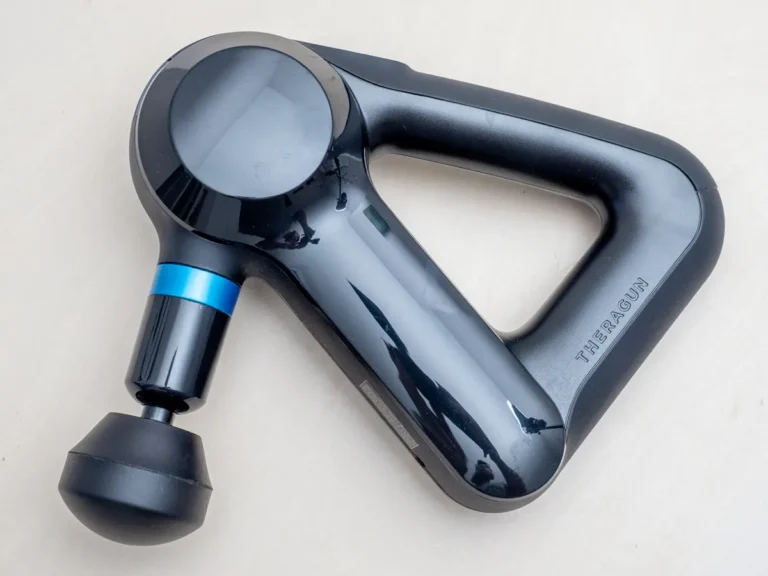
The Renpho Massage Gun is our top pick under $100, and it’s the one we’d point a first-time buyer toward without much hesitation. It pairs a stall force strong enough for real muscle with a price that usually lands under $60, which leaves room in the budget for extra attachment heads if you want them. It isn’t the only decent option in this price band, though, so here’s how the rest stack up.
Under $100 is a real, usable price tier for a massage gun now, not the compromise it was a few years ago. The gap between a $70 gun and a $250 one has narrowed on the specs that actually matter day to day. What you give up tends to be app connectivity, a slightly louder motor, and a shorter warranty, not the core ability to work a tight muscle.
What can you get for under $100?
Most models in this range land in the 12mm to 16mm amplitude range we’d recommend for general use, per our full massage gun buying guide. Stall force tends to sit a bit lower than premium models, usually in the 30-to-45-pound range rather than 50-plus, which is fine for shoulders, calves, and a stiff lower back but can feel underpowered on something like a dense hamstring after a heavy squat day.
Battery life is often the biggest giveaway of a budget build. Where a $250 gun might run 5 to 6 hours, a lot of sub-$100 models land closer to 2 to 3. For home use between charges, that’s still plenty. It’s worth knowing before you assume every gun performs the same on paper.
Renpho Massage Gun
Best overall pick under $100, and usually under $60.
- Reasonable stall force for the price tier
- Comes with a case and multiple attachment heads
- Long-running listing with an established review history
TOLOCO Massage Gun
A close runner-up, often the cheapest option that still holds up on real muscle.
- Lightweight build, easy to hold on your own back for a full session
- Multiple speed settings, though fewer than pricier models
- Typically the lowest price of the models we’d recommend
Opove M3 Pro Max
A step up in stall force if you’re willing to spend closer to the $100 ceiling.
- Higher stall force than most in this price band
- Runs a bit louder than the Renpho or TOLOCO
- Usually priced near the top of the under-$100 range
How do these compare on paper?
| Product | Best for | Price range |
|---|---|---|
| Renpho Massage Gun | First-time buyers, general everyday use | Under $60 |
| TOLOCO Massage Gun | Tightest budget, lightweight preference | Under $50 |
| Opove M3 Pro Max | More stall force, less noise sensitivity | $80 to $100 |
Verdict
The Renpho is the safest first purchase. Step up to the Opove only if you know you want more stall force and don’t mind a bit more motor noise.
What should you skip in this price range?
Watch out for no-name listings with inflated amplitude claims. A gun advertised at 12mm can measure closer to 8mm once someone puts a ruler to the stroke, and there’s no easy way to verify amplitude yourself before buying. Sticking to models with a real review history, rather than a brand-new listing with a handful of five-star reviews, is the simplest way to avoid this.
Also skip anything that doesn’t list a stall force or amplitude spec at all. If a listing only advertises speed settings and battery life, that’s usually a sign the amplitude is on the shallow side and the seller would rather not draw attention to it.
Is a budget gun going to feel noticeably worse than a premium one?
For most everyday use, not really. The physical sensation of a well-specced $60 gun on a tight shoulder isn’t dramatically different from a $250 one. Where the gap shows up is in extras: app tracking, a slightly quieter motor, a longer warranty, and a wider range of attachment heads. If none of that matters to you, there’s little reason to spend more. If quiet operation is the priority, our guide to quiet massage guns is worth reading before you commit to one of these three.
Who might want to spend more than $100?
If you’re training seriously, working large muscle groups after heavy sessions, or you know noise is a hard limit in your household, it’s worth looking past this price tier. A higher stall force handles a tense hamstring or a dense trap without bogging down, and a quieter motor matters more than most first-time buyers expect once they’re using one at 10pm next to a sleeping partner. Our full buying guide walks through the full spec range, including where premium models earn the extra cost.
Some people with sciatica-related discomfort also add a massage gun to their routine, generally on the glutes and lower back rather than along the nerve path itself. That’s a more specific use case than general shoulder or calf tightness, and it’s worth reading a dedicated breakdown before choosing a model. We cover it, including what to avoid, in our article on massage guns and sciatica discomfort.
How we’d narrow it down
Start with the Renpho if this is your first massage gun and you’re not sure how much use it’ll get. Move to the TOLOCO if price is the only thing that matters and you’re comfortable with fewer speed settings. Choose the Opove if you already know a lighter-power gun has disappointed you before, or if you’re working larger muscle groups after training rather than everyday desk-related tightness.
Frequently asked questions
What’s the best massage gun under $100 for everyday use?
The Renpho Massage Gun is our top pick, since it balances stall force, battery life, and price better than most competitors in this range. It’s a reasonable first purchase for someone who hasn’t owned one before.
Are cheap massage guns worth buying?
A well-reviewed model under $100 can genuinely hold up for everyday use on shoulders, calves, and a tight lower back. The risk is unverified no-name listings with inflated specs, not the price tier itself.
What’s the difference between a $60 massage gun and a $250 one?
Mostly extras: app connectivity, a quieter motor, a longer warranty, and sometimes a bit more stall force. On the spec sheets, the core percussive function is similar across both.
Should I buy a massage gun with extra attachment heads included?
It’s a nice bonus but not essential. A flat head and a bullet head cover most everyday use. Extra heads mostly help with pinpoint spots like the arch of the foot or between the shoulder blades.
How long does a sub-$100 massage gun typically last before it needs replacing?
With regular use, a well-reviewed budget model usually holds up for a year or two before the motor or battery starts to noticeably weaken. Charging it after each session rather than letting it sit fully drained tends to stretch that lifespan out further.
If you’re torn between two of these, default to the Renpho and put the money you save toward a second recovery tool. Our massage gun versus foam roller comparison is a good next stop if you’re still deciding what to buy first, and our full buying guide covers the specs behind every recommendation on this page in more depth.
From the Relief for Body desk
Every guide here is built from the manufacturer’s own documentation, published safety guidance, and the pattern in what owners report over months of use, not from a lab or a clinic. Nothing is sponsored, and verdicts are settled before any affiliate link goes in. We are not clinicians, and nothing on this site replaces one. How we review explains the process.
This article is general information, not medical advice. If pain is sharp, persistent, or getting worse, see a clinician.
Google lets you pick which sites come up first in your own results.