Relief for Body is reader-supported. When you buy through links on our site, we may earn an affiliate commission. This doesn't affect our verdicts.
Of the gear people buy after a hard workout, compression socks and a foam roller give you the most benefit for the least money. A good heating pad or ice pack is close behind. Pneumatic recovery boots sit at the top of the price range, and they carry the thinnest evidence to back up that premium. That’s the short version. The rest of this guide walks through why, and what to actually buy in each category.
We hear from a lot of readers who assembled a whole recovery shelf after one especially brutal leg day, then never touched half of it again. The goal here isn’t to talk you into buying everything. It’s to rank the categories honestly so the next thing you buy earns a spot in your routine, instead of gathering dust next to a rowing machine that’s become a coat rack.
What’s worth buying after a hard workout?
Four categories cover almost everything marketed as “recovery gear”: compression wear, self-massage tools (foam rollers and massage guns), heat and cold products, and pneumatic compression boots. They are not equivalent in cost, and they are definitely not equivalent in how much daily use they realistically get once the novelty wears off.
| Category | Typical cost | Cost-to-benefit | Best for |
|---|---|---|---|
| Compression socks/sleeves | Budget to mid-range | High: daily use, low cost | All-day standing jobs, travel, light everyday recovery |
| Foam roller | Budget | High: one-time cost, years of use | General tightness, warm-up and cool-down routines |
| Massage gun | Mid-range | Moderate: pricier than a roller, similar use case | Targeted spots, less setup than a roller |
| Heating pad / ice pack | Budget | High: cheap, reusable, well-understood use | Localized soreness or a stiff lower back after sitting |
| Recovery boots | High | Lower: biggest price tag, most niche use case | Frequent high-volume training, deep pockets |
That ranking isn’t about which category feels the most impressive to own. A pair of recovery boots looks a lot more serious sitting in a living room than a $12 foam roller. But the roller is the one still getting used two years later.
How did we rank these categories?
Three things mattered most: how often people report using the product past the first month, how much of the cost is tied to genuinely different function versus extra features, and how narrow or broad the use case is. A foam roller works for almost any tight muscle group. Recovery boots work well for one specific job, cycling blood through tired legs, and do very little else.
We also weighted toward categories with a low cost of being wrong. A $15 pair of compression socks that doesn’t suit your routine is a minor loss. A few hundred dollars on recovery boots that end up in a closet is a much bigger one.
Compression socks and sleeves
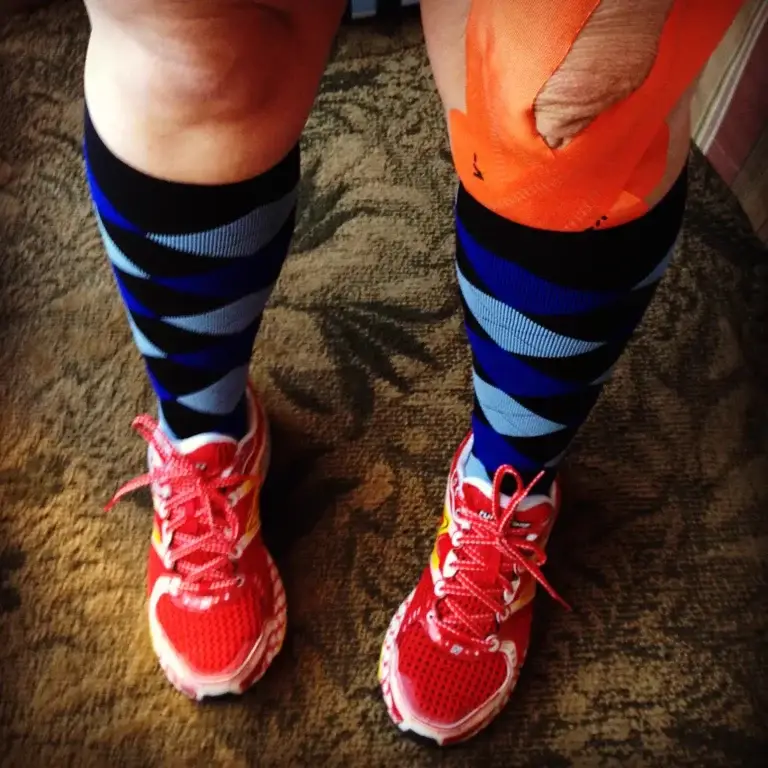
Graduated compression is the category with the most everyday utility per dollar. The mechanism is straightforward: a sock that’s tighter at the ankle than at the calf encourages blood flow back up the leg. That’s why people on their feet all day, frequent flyers, and runners doing back-to-back training days all reach for the same product category for different reasons.
Nurses and other standing-shift workers are one of the biggest audiences for these, and we cover the specifics of what to look for in our guide to compression socks for nurses on 12-hour shifts. Travelers have a slightly different use case, tied more to how long you’ll be sitting still than to how much walking you did that day, which we break down in our piece on compression socks for flights.
Sockwell Elevation Graduated Compression Socks
A solid daily pair for standing shifts or long travel days.
- Graduated compression in the 15–20 mmHg range most people find comfortable for all-day wear
- Merino wool blend, which holds up better on repeated washes than pure synthetic pairs
- Available in a range of sizes rather than one-size-stretches-to-fit
If budget is the deciding factor here, this is genuinely the cheapest entry point on this whole list. A pair of graduated compression socks typically runs in the same range as a couple of coffees, and unlike a lot of recovery gear, there’s no learning curve. You put them on before the shift or the flight and take them off after.
Foam rollers and massage guns
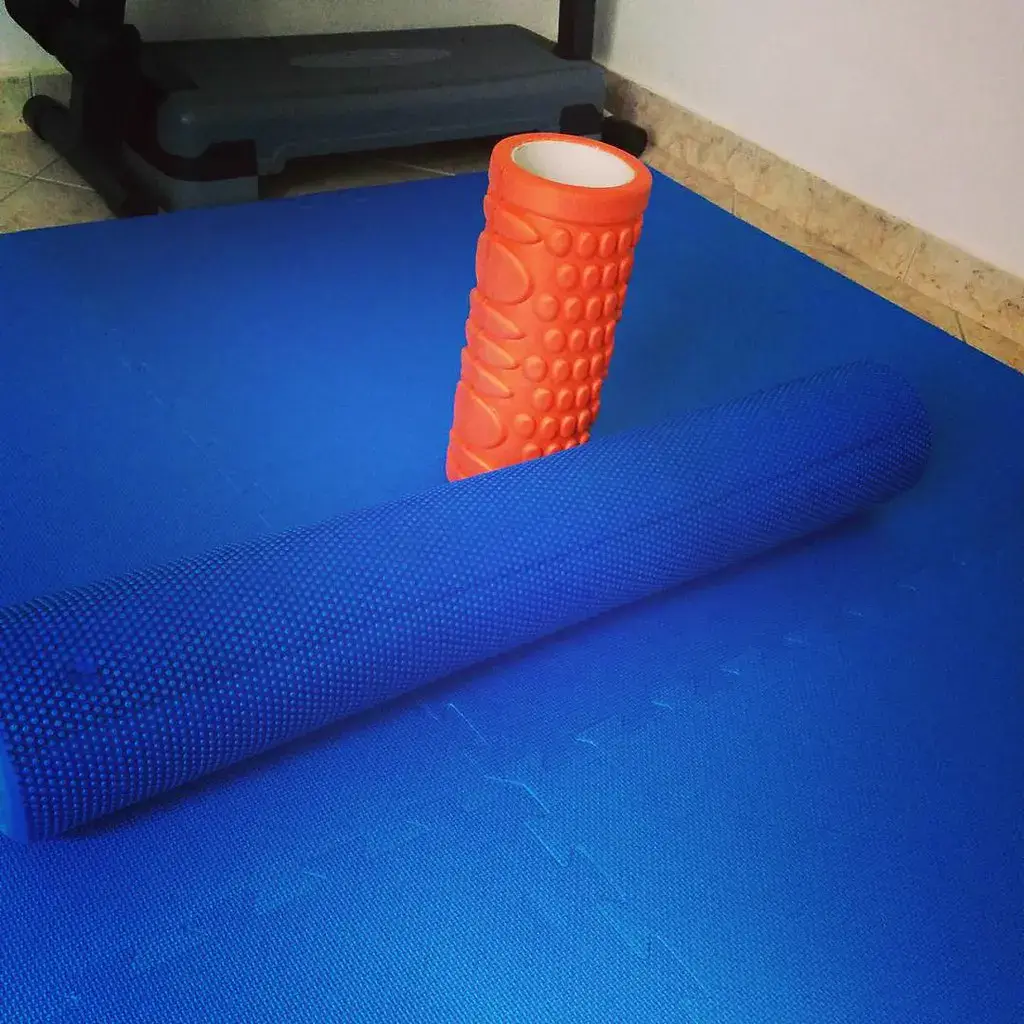
These two compete for the same job: working on a tight muscle without another person’s hands. A roller costs less and covers larger areas at once, like the whole length of a quad or the muscles along the side of the back. A massage gun costs more but takes less setup and does a better job on a small, specific spot like a knot in the upper trap.
If you’re deciding between the two, our full mobility tools guide maps tool type to the area you’re trying to work on, which is a more useful starting point than picking based on price alone.
TriggerPoint GRID Foam Roller
A firm, textured roller that holds its shape better than basic foam over years of use.
- Hollow core keeps it lighter and more packable than a solid foam roller
- Textured surface aimed at larger muscle groups, not pinpoint spots
- Widely recommended in physical-therapy and strength-coaching circles as a starter roller
Theragun Prime
A quieter, lighter massage gun for people who found the entry-level models too buzzy.
- Lower noise output than budget massage guns, which matters if you’re using it in a shared space
- Adjustable arm angle, useful for reaching your own back without help
- Comes with a smaller set of attachments than the pro-tier models, which keeps the price down
Heat and cold therapy
This is the category people already understand intuitively, mostly because it’s the one they grew up with. A warm compress for a stiff muscle, an ice pack for a fresh strain after a fall on the court. What’s less obvious is when to reach for one over the other, and for how long, which is exactly what our heat vs. cold therapy guide covers in more detail.
It’s also the cheapest category on this list by a wide margin, and the one with the least room for a purchase to go wrong. A basic heating pad and a gel ice pack together typically cost less than a single attachment for a mid-range massage gun.
Sunbeam Renue Heat Therapy Wrap
A flexible heat wrap for a stiff lower back after a long day at a desk or a hard leg session.
- Multiple heat settings, so it isn’t an all-or-nothing product
- Cordless option available for people who don’t want to sit tethered to an outlet
- Auto shutoff after a set period, a feature worth prioritizing in any heating pad
Buying a heating pad and an ice pack at the same time is common and usually unnecessary. Our heat or cold tool tells you which one the situation calls for before you spend on either.
Recovery boots (pneumatic compression)
Recovery boots use inflating chambers to squeeze the legs in a wave pattern, the same underlying idea behind medical compression pumps used for circulation support, adapted for athletes. They’re the most expensive category here, often by several multiples over anything else on this list. The honest read on the evidence is that they help some people feel like their legs recover faster, without changing much that’s been measured in a lab setting.
We go deeper on whether the price is justified in our dedicated piece, recovery boots: are they worth the price? The short version: worth considering if you’re training at high volume several days a week and have the budget to spare. A lower priority if you’re choosing your first piece of recovery gear.
Do you need more recovery gear, or just more sleep?
This is the question worth asking before any purchase on this list. A lot of what gets labeled “poor recovery” is really just not enough sleep, not enough water, or a training load that jumped too fast in too short a window. No product on this page fixes any of those three things.
A rough gut check: if you’re sleeping under seven hours a night on training days, address that first. If your soreness spiked because you doubled your usual volume last week, that’s a program problem, not a gear gap. Recovery products help at the margins, easing the soreness that shows up even when the basics are covered. They’re not a substitute for the basics themselves.
How much should a starter recovery kit cost?
You don’t need to spend much to cover the categories that matter most. A pair of compression socks and a foam roller together usually land in budget territory, well under what a single pair of recovery boots costs on its own. Add a heating pad and you’ve covered three of the four categories on this list for a fraction of what one premium gadget runs.
Where the spending curve gets steep is in the last two categories: massage guns move into the mid-range, and recovery boots jump into a different bracket entirely. That’s not a reason to avoid them, but it’s a reason to buy them second, after you know your routine will use daily compression and rolling.
Verdict
Start with compression socks and a foam roller if you’re building a recovery kit from scratch. They’re the cheapest entries here and the ones most people keep using a year later. Add heat or cold therapy next. Recovery boots are a “once you know you’ll use it” purchase, not a starting point.
How should you build a recovery routine?
Buying gear is the easy part. The harder habit is using it consistently, which matters more than which specific product you land on.
- Pair compression socks with the activity that triggers soreness, like shift work, travel, or long runs, instead of wearing them only when you remember.
- Keep a foam roller somewhere visible. One left in a closet gets used twice and forgotten.
Beyond that, layering categories tends to work better than betting everything on one product. Someone standing all day at work who also runs on weekends gets more from compression socks plus a roller than from a single expensive gadget doing one job. The people we hear from who stick with a recovery routine longest are usually the ones with two or three cheap, boring habits, not one impressive purchase.
Timing matters too, more than most people assume when they first buy this stuff. Compression works best put on soon after the activity that caused the soreness, not the next morning as an afterthought. Foam rolling tends to help most as part of a short warm-up or cool-down, five or ten minutes, rather than a single long session once a week. Heat generally suits stiffness from sitting or inactivity, while cold suits a fresh, sharp strain. Getting the timing right does more for how a routine feels day to day than upgrading to a pricier version of the same tool.
Frequently asked questions
Do you need all four categories of recovery gear?
No. Most people get most of the benefit from one or two categories matched to their actual activity, like compression socks for a standing job or a foam roller for general tightness. Buying every category at once tends to lead to gear that sits unused.
What’s the single best first purchase for a beginner?
A pair of graduated compression socks or a basic foam roller. Both are inexpensive, have a long useful life, and fit almost any activity level, which makes them a lower-risk starting point than a massage gun or recovery boots.
Is expensive recovery gear better?
Not consistently. Price often tracks features like app connectivity or extra intensity settings rather than a meaningfully different result. A mid-range foam roller or a well-reviewed budget massage gun covers what most people need without the premium price tag.
How often should recovery gear get used?
Consistency matters more than frequency. Compression socks are typically worn during the activity that causes the soreness, whether that’s a shift, a flight, or a long run, while tools like foam rollers are commonly used a few times a week rather than daily.
Are recovery boots overkill for a casual gym-goer?
For most casual gym-goers, yes. The price tag is hard to justify unless you’re training at high volume multiple days a week. A casual lifter or runner typically gets more day-to-day benefit from compression socks and a foam roller at a fraction of the cost.
From the Relief for Body desk
Every guide here is built from the manufacturer’s own documentation, published safety guidance, and the pattern in what owners report over months of use, not from a lab or a clinic. Nothing is sponsored, and verdicts are settled before any affiliate link goes in. We are not clinicians, and nothing on this site replaces one. How we review explains the process.
This article is general information, not medical advice. If pain is sharp, persistent, or getting worse, see a clinician.
Google lets you pick which sites come up first in your own results.