Relief for Body is reader-supported. When you buy through links on our site, we may earn an affiliate commission. This doesn't affect our verdicts.
Soft foam rollers suit anyone new to rolling or working on a sensitive area, medium density is the reasonable default for most regular use, and firm rollers are for people with years of rolling experience who want more pressure without leaning harder. Density, not size or brand, is the setting that actually changes how a roller feels against a sore muscle.
Most first-time buyers pick based on price or a review star rating and end up with something too firm, which is part of why so many rollers end up unused in a closet after a few painful sessions. Our broader mobility tools guide covers where a roller fits next to bands, balls, and straps if you’re starting from scratch.
How is density measured?
There’s no single industry standard, so “soft,” “medium,” and “firm” mean roughly what they sound like rather than a precise number you can compare across brands. In practice, a soft roller compresses noticeably under body weight, a medium roller gives a little but holds most of its shape, and a firm roller barely gives at all. The only reliable way to judge before buying is to check verified reviews for phrases like “too intense” or “gentle enough for beginners,” since actual firmness varies more between brands than the labels suggest.
Who should start with a soft roller?
Anyone rolling for the first time, anyone working on a spot that’s currently sore rather than just generally tight, and anyone rolling a bony area like the shins or the outside of the knee benefits from starting soft. A soft roller lets you get a feel for the motion and figure out where the tight spots are without the discomfort of too much pressure clouding that out. It’s also the safer starting point for older adults or anyone with a health condition that makes firmer pressure a bad idea; check with a healthcare provider first if that applies.
When does medium density make sense?
Medium is where most people land after the first few sessions with a soft roller, once the motion feels familiar and a bit more pressure feels useful rather than uncomfortable. It works well across most large muscle groups: quads, calves, the muscles alongside the spine, and it’s forgiving enough that using it slightly wrong doesn’t cause much harm. If you’re only ever going to own one roller, medium density is the safest single choice for a household with more than one user.
Who needs a firm roller?
Firm rollers, especially ones with a textured or ridged surface, are aimed at people who roll regularly and find that medium density stopped doing much for them. Athletes and people who’ve been rolling for a year or more are the typical audience. A firm roller applied to a genuinely tight, unconditioned muscle can be uncomfortable enough that people avoid using it altogether, which defeats the purpose of buying one in the first place.
How does density compare side by side?
| Density | Best for | Typical user |
|---|---|---|
| Soft | Sensitive areas, first-time use | Beginners, older adults |
| Medium | General everyday rolling | Most regular users |
| Firm | Deep pressure, textured surfaces | Experienced athletes |
Verdict
Start medium unless you’re brand new to rolling or working a sensitive spot, in which case go soft first and upgrade once the motion feels easy.
What should you buy?
AmazonBasics High-Density Round Foam Roller
A smooth, medium-density roller that’s a reasonable default for a first purchase.
- Smooth surface, gentler than textured rollers of the same density
- Multiple length options, including a shorter travel size
- Typically under $20
TriggerPoint GRID Foam Roller
A textured medium-firm roller built to hold up over years of regular, more serious use.
- Hollow core, lighter to carry than solid foam of the same size
- Textured surface for more targeted pressure than a smooth roller
- Typically in the $30–$40 range
321 STRONG Soft Density Foam Roller
A softer entry-level roller aimed at beginners and anyone working on a sensitive spot.
- Softer EVA foam, more forgiving on bony areas
- Comes with a basic guide to common rolling positions
- Usually under $18
Does a textured surface change anything?
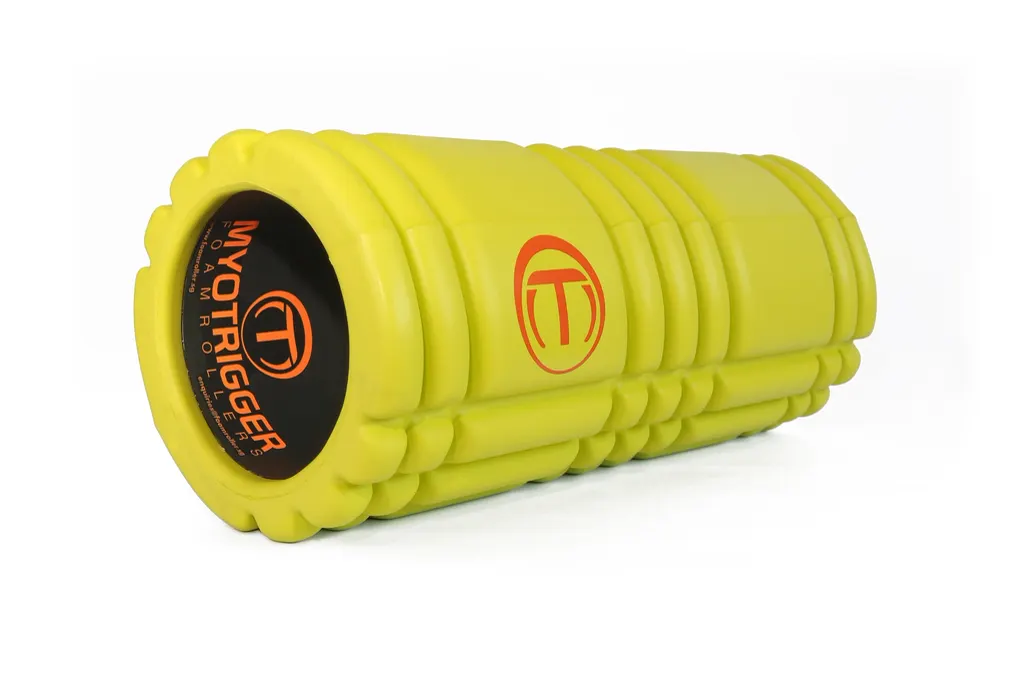
A textured or ridged roller concentrates pressure into raised sections rather than spreading it evenly, which some people find more effective for a specific tight spot and others find too intense for regular use. It’s a separate variable from density, so a soft roller can still have texture, and a firm one can be perfectly smooth. If you’re unsure, a smooth roller is the easier one to get used to first.
How often should you roll?
Most people who roll regularly do it daily or close to it, usually 5 to 10 minutes on the areas that tend to feel tight. Our guide to foam rolling frequency covers how to build that into a routine without overdoing any one spot.
Should you get a roller or a massage gun instead?
A massage gun applies concentrated, motorized pressure to a small area, which is a different tool for a different job than a roller’s broad, body-weight-driven pressure across a whole muscle group. Density doesn’t really translate between the two the way it might seem to; a firm roller and a strong massage gun setting aren’t directly comparable. Our massage gun versus foam roller comparison and our separate massage gun buying guide both go deeper into that decision if a roller alone isn’t cutting it.
How long does a foam roller last?
A decent roller used regularly holds its shape for a couple of years before it starts to compress permanently or develop flat spots. Softer rollers tend to wear out faster than firm ones, simply because the material compresses more with every session. Signs it’s time to replace one: it no longer springs back after use, the surface has started to crack or flake, or it feels noticeably softer than it did when new even at rest.
Storing a roller somewhere it isn’t sat on or stacked under heavier gear extends its life more than any feature of the roller itself. A roller left compressed under a pile of equipment for weeks can develop a permanent flat side well before its normal lifespan is up.
Is size worth considering alongside density?
Standard rollers run about 36 inches, long enough to support a back or a pair of legs at once, while half-size and travel rollers, closer to 12 to 18 inches, work fine for single-limb rolling and pack more easily for a gym bag or a trip. Length doesn’t change how firm a roller feels, but a shorter roller can feel less stable under a full body-weight stretch across the back, which matters more for beginners still getting used to the motion. For most home use, a full-length roller is the easier one to work with, with a travel size as an optional add-on later.
Frequently asked questions
Is a firmer foam roller always more effective?
Not necessarily. More pressure isn’t automatically better, and a roller that’s too firm for your current level often just gets avoided rather than used. Effectiveness depends more on consistent use than on maximum firmness.
Can one roller work for the whole household?
A medium-density roller is the most reasonable shared choice, since it’s tolerable for most experience levels without being too soft for anyone who rolls regularly. Households with a wide range of comfort levels sometimes keep both a soft and a medium roller instead.
Does foam roller density matter for injury recovery?
Softer is generally the safer starting point around any area that’s currently sore or recovering, but this is a case where checking with a healthcare provider before rolling at all is a better move than guessing at the right density.
If you’re only going to buy one roller this year, medium density with a smooth surface is the least likely choice to end up ignored in a closet. Our full mobility tools guide is the better starting point if the roller is just one piece of a bigger routine you’re putting together.
From the Relief for Body desk
Every guide here is built from the manufacturer’s own documentation, published safety guidance, and the pattern in what owners report over months of use, not from a lab or a clinic. Nothing is sponsored, and verdicts are settled before any affiliate link goes in. We are not clinicians, and nothing on this site replaces one. How we review explains the process.
This article is general information, not medical advice. If pain is sharp, persistent, or getting worse, see a clinician.
Google lets you pick which sites come up first in your own results.