Relief for Body is reader-supported. When you buy through links on our site, we may earn an affiliate commission. This doesn't affect our verdicts.
Short answer: Ice a fresh sprain or strain for up to 20 minutes at a time, every 2 to 3 hours, for the first 2 to 3 days, with a towel between the pack and your skin. That is the NHS guidance. A review of the ice research found repeated 10-minute sessions through a wet towel worked best, so 10 minutes is a perfectly good session too.
This page covers timing and equipment. It is not medical advice, and swelling that will not settle needs a professional look. If you have not yet decided between an ice pack and a heating pad, start there.
How long should you ice an injury?
Two sources give the useful numbers. The NHS page on sprains and strains says to apply an ice pack for up to 20 minutes every 2 to 3 hours during the first 2 to 3 days. A 2001 review in the International Journal of Sports Medicine, Ice therapy: how good is the evidence?, concluded that melting iced water applied through a wet towel for repeated periods of 10 minutes was the most effective method it found.
Put together, a session of 10 to 20 minutes covers both. The review’s reasoning for short, repeated sessions is that they keep the muscle cool while letting the skin return to normal in between. Longer is not better. Twenty minutes is a ceiling, not a target.
| Question | What the source says | Source |
|---|---|---|
| Session length | Up to 20 minutes | NHS |
| Best method in the review | Repeated 10-minute periods, iced water through a wet towel | Mac Auley, 2001 |
| How often | Every 2 to 3 hours | NHS |
| For how many days | The first 2 to 3 days after a sprain or strain | NHS |
| After a session | Reflexes and motor function can stay impaired for up to 30 minutes | Mac Auley, 2001 |
How often can you ice in a day?
Every 2 to 3 hours while you are awake, according to the NHS, which places icing inside its PRICE routine (protection, rest, ice, compression, elevation) for the first 2 to 3 days. That works out to five or six sessions over a waking day, not a pack strapped on all afternoon.
The same page lists what to avoid over those first couple of days: heat such as hot baths and heat packs, alcohol, and massage. After that window, keep icing only if it still helps. The 2015 review by Malanga and colleagues found limited trial evidence for cold therapy after acute injury, so a rigid schedule past the first days has little to back it.
What happens if you ice for too long?
A freezer pack sits well below 0°C (32°F), and the NHS says frostbite can start when skin is exposed to that temperature. Early signs it lists are skin that is cold and firm, numb or stinging, and red or pale. If it gets worse, the skin can turn hard, white, blue or blotchy. Stop at the first of those signs and let the skin warm back up before the next session.
Two habits remove most of the risk. Keep a cloth layer between pack and skin, since the NHS itself suggests wrapping frozen vegetables in a tea towel. And set a timer rather than icing until you fall asleep.
Should you ice before or after exercise?
After. The Mac Auley review notes that reflex activity and motor function are impaired for up to 30 minutes after ice treatment, which is the opposite of what you want before a run or a lift.
For ordinary muscle soreness the day after a workout, cold may not be the better tool at all. In the Malanga review, heat-wrap therapy gave significantly more pain relief for delayed-onset muscle soreness than cold did. Our heat or cold tool sorts that out in four questions, including the symptoms that call for neither.
Does elevation help while icing?
The NHS pairs ice with keeping the injured limb raised on a pillow. Doing both at once is the easy version: prop the ankle or knee on cushions, put the wrapped pack on, start the timer. Icing and then going straight back to the activity that caused the strain leaves out the rest part of the routine.
What can you use if you don’t have an ice pack?
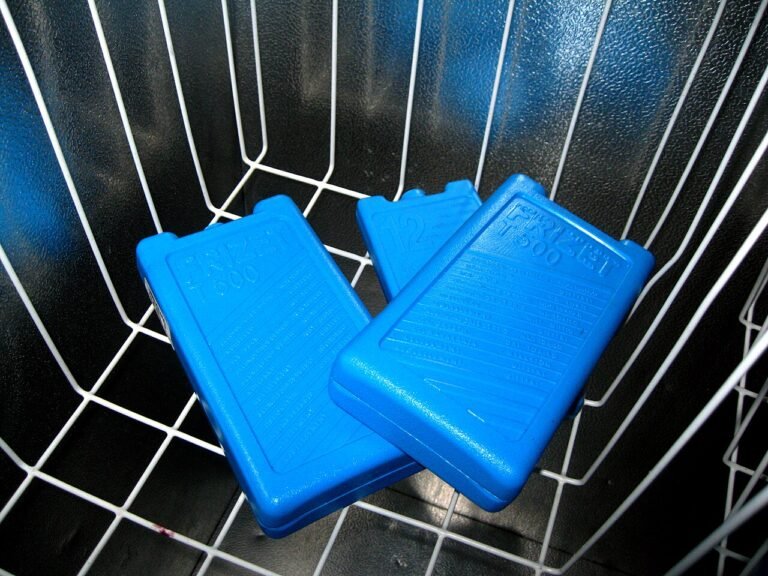
A bag of frozen vegetables wrapped in a tea towel is the NHS’s own suggestion. Crushed ice in a zip-top bag inside a towel works the same way. Peas and crushed ice both shape themselves around a joint, which a solid block cannot do. The downside is that a bag of vegetables does not survive many thaw and refreeze cycles, and that is where a reusable pack starts to pay for itself.
Which ice pack should you buy?
Pick something flexible enough to wrap a knee or ankle, with a cover or room for a towel. These two have Amazon listings we checked in October 2026.
TheraPearl Sports Pack
A small reusable hot and cold pack, cheap enough to keep one in the freezer at all times.
- Sports size, sold as reusable for both cold and heat
- Listed at $13.70 in Amazon search results when we checked; prices move
- Sized for a knee, elbow or ankle rather than a whole back
Chattanooga ColPac Oversize
The silica gel pack sold to physical therapy clinics, in a 12.5 by 18.5 inch size that covers a back or thigh.
- The listing says it gives up to 30 minutes of cold, more than a 20-minute session needs
- Latex-free polyurethane cover, but still wrap it in a towel
- No price was shown on the listing when we checked
Verdict
Ten to 20 minutes, wrapped, every 2 to 3 hours, for the first 2 to 3 days. Stop early if the skin goes pale or numb, and do not ice right before training.
If cold packs are turning into a regular part of a recovery routine, see where they fit in our athletic recovery gear guide, and whether pneumatic compression boots would earn their price for you. For a stiff lower back from sitting, heat usually suits better, and our guide to heating pads for a desk chair covers that. Heat has its own time limit too, explained in do heating pads turn off automatically.
Frequently asked questions
How long should I ice an injury?
Up to 20 minutes per session, according to the NHS. A review of the research found repeated 10-minute sessions through a wet towel worked best, so anywhere from 10 to 20 minutes is reasonable.
How often can you ice in a day?
Every 2 to 3 hours while you are awake, for the first 2 to 3 days after a sprain or strain. That is roughly five or six sessions a day, each followed by a break that lets the skin return to normal.
Is icing for 30 minutes too long?
It is longer than the NHS guidance of up to 20 minutes, and a freezer pack is cold enough to cause frostbite. Split it into shorter sessions instead.
How many days should you ice an injury?
The NHS applies its ice routine to the first 2 to 3 days. Evidence for cold therapy beyond the acute stage is limited, so if swelling has not improved after a few days, get it checked rather than icing longer.
Should you ice before or after a workout?
After. A review of ice therapy found reflexes and motor function can stay impaired for up to 30 minutes after icing, which makes it a poor warm-up.
Can you put ice directly on your skin?
No. Wrap it in a towel or a pack cover first. The NHS suggests frozen vegetables wrapped in a tea towel, and the research review used a wet towel between the ice and the skin.
Is it safe to sleep with an ice pack on?
No. Nobody is timing the session while you sleep, and the guidance tops out at 20 minutes. Set a timer and take the pack off when it goes.
If a few days of icing has made no visible difference, that is a reason to see a healthcare provider, not to ice longer. For the wider choice between heat and cold, our practical guide to picking between them starts from the beginning.
Sources
- NHS, Sprains and strains, read October 2026.
- NHS, Frostbite, read October 2026.
- Mac Auley DC, Ice therapy: how good is the evidence? International Journal of Sports Medicine, 2001;22(5):379-84.
- Malanga GA, Yan N, Stark J, Mechanisms and efficacy of heat and cold therapies for musculoskeletal injury, Postgraduate Medicine, 2015;127(1):57-65.
- Amazon listings for TheraPearl (B007PKH9A2) and Chattanooga ColPac (B000QFZRNE), read October 2026.
From the Relief for Body desk
Every guide here is built from the manufacturer’s own documentation, published safety guidance, and the pattern in what owners report over months of use, not from a lab or a clinic. Nothing is sponsored, and verdicts are settled before any affiliate link goes in. We are not clinicians, and nothing on this site replaces one. How we review explains the process.
This article is general information, not medical advice. If pain is sharp, persistent, or getting worse, see a clinician.
Google lets you pick which sites come up first in your own results.