Relief for Body is reader-supported. When you buy through links on our site, we may earn an affiliate commission. This doesn't affect our verdicts.
Short answer: The NHS lists a heat pad or hot water bottle on your tummy among the things that can ease period pain. The pads sold on Amazon split into two kinds: a classic plug-in pad you lie down with, and a cordless belt you can wear while you move around. The four below differ mainly in power source, size, heat range and how long the auto shut-off lets them run.
This is a gear page, not medical advice. If your period pain is severe, is getting worse, or stops you doing your usual things, see a GP or another clinician rather than relying on a pad.
Heat is only one of several ways to get through a bad day, and the right pad depends on lying down versus keeping busy. Our overview of types of heating pads covers the basics, heat versus cold therapy explains when each one is used, and how auto shut-off works is worth a read before you buy anything that can stay on for hours.
What the NHS says about period pain
The NHS page on period pain says it is common, and that “Period pain usually happens to women and girls around the start of their period.” The symptoms it describes include “painful cramps in your tummy that spread to your back and thighs” and “a sharp pain or a dull ache in your tummy”. It adds that “Period pain usually lasts for up to 3 days and can affect your daily activities.”
On the cause, the page says: “Period pain happens when your womb tightens during your period. It’s often a normal part of the menstrual cycle.”
The self-care list under “Do” includes:
- “have a warm bath or shower”
- “use a heat pad or hot water bottle wrapped in a tea towel on your tummy”
- “try massaging your tummy and back”
- “try some gentle exercise like yoga, swimming, walking or cycling”
- “use painkillers like paracetamol or ibuprofen”
The page is also clear about when to get help. It says to “Ask for an urgent GP appointment or get help from NHS 111 if” your pelvic pain or period pain is “severe or worse than usual, and painkillers have not helped”. It lists reasons to see a GP at a routine pace too, among them periods that become “more painful, heavier or irregular”, pain that is “stopping you doing your usual daily activities”, pain during sex, and bleeding between periods.
If you have severe period pain, a GP may recommend anti-inflammatory medicines, a TENS machine or contraception, according to the same page. A heat pad is a comfort measure that sits next to those options. It does not replace them.
Plug-in pad or cordless belt: what you are actually choosing
Most of the decision comes down to where you will be while it is on.
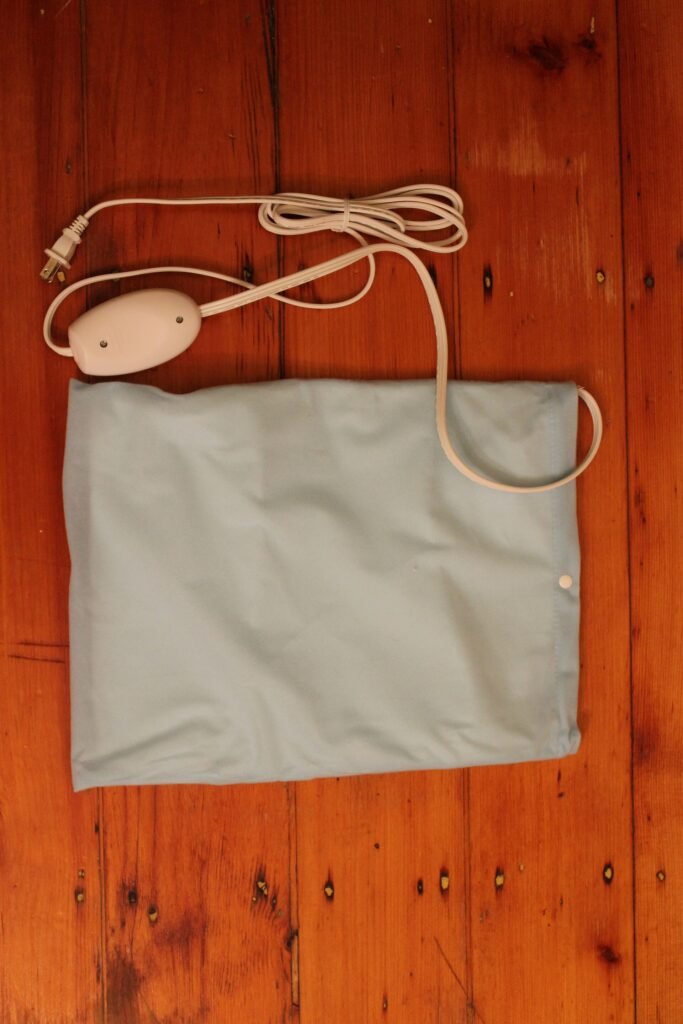
Plug-in pads are flat fabric panels with a cord and a hand controller. They tend to be cheap, large and warm for as long as they are plugged in, up to whatever the timer allows. The catch is the cord. Once you stand up to make tea, you either unplug it or trail it behind you. They suit a couch, a bed or a desk chair next to an outlet.
Cordless belts have a rechargeable battery and an elastic strap, so the pad stays on your lower abdomen while you walk, cook or sit in a meeting. Many add vibration modes. The trade-off is battery life and a smaller heating area.
Whichever you pick, put something between the pad and your skin. The NHS wording is a tea towel, and a thin hand towel does the same job. The NHS burns page says burns “usually happen when dry heat comes into contact with your skin”, so a low setting and a layer of fabric are the sensible defaults for the first few minutes.
Four heating pads for period cramps compared
| Product | Style | Size or fit | Key features from the listing |
|---|---|---|---|
| Flannel electric heating pad, 24×12 in | Plug-in | 12 x 24 in; other sizes offered | 6 heat levels, timer of 30 to 120 minutes, 75 in cord, machine washable |
| Cordless menstrual heating pad (black belt) | Cordless belt | Heating zone about 8.3 x 9 in; strap to 58 in | 4 heat levels, 4 massage modes, 30-minute auto shut-off |
| Portable heating pad for period cramps (shesangel, pink) | Cordless belt | Adjustable belt | 6 heat levels, 6 massage modes, 3000mAh battery |
| Vilicert wrap heating pad, 12 x 24 in plus 26 in belt | Wrap with belt | 12 x 24 in pad, belt adds 26 in | 6 heat levels, timers from 1 to 6 hours, machine-washable cover |
Specs come from the Amazon listing bullets read in November 2026. Ratings and prices change often; check the listing before you buy.
Flannel Electric Heating Pad, 24×12 inch
By far the most reviewed here, and the cheapest if you are happy to stay near an outlet.
- Rated 4.4 out of 5 from about 20,800 ratings; around $12.91 when checked.
- 6 heat levels, a timer you can set to 30, 60, 90 or 120 minutes, and overheat protection.
- 75-inch cord and a soft flannel cover that the listing says can be machine washed, though not often because of the built-in wires.
A 12 x 24 inch panel covers the whole lower abdomen and can wrap partway round to the back, which matters when cramps spread there, as the NHS describes. The cord is the only real limit.
Portable Cordless Menstrual Heating Pad with 4 Heat Levels and 4 Massage Modes
The best-reviewed cordless belt in this group, with a short timer for safety.
- Rated 4.4 out of 5 from about 4,500 ratings; around $24.99 when checked.
- Heat levels of 104, 118, 133 and 149°F, plus four vibration modes.
- Two built-in 1800mAh batteries, a heating zone of about 8.3 x 9 inches and a strap that extends to 58 inches.
- 30-minute auto shut-off, according to the listing.
The 30-minute cut-off is a mixed feature. It lowers the risk of dozing off with a hot pad on, but on a long cramping evening you will be pressing the button again.
Portable Heating Pad for Period Cramps, 6 Heat Levels and 6 Massage Modes (shesangel, pink)
A cordless belt with the larger battery of the two, for people who want fewer recharges.
- Rated 4.4 out of 5 from about 2,300 ratings; around $22.48 when checked.
- 6 heat levels and 6 massage modes; the listing says it reaches 149°F in about 5 minutes.
- 3000mAh battery, which the listing says lasts more than 5 hours.
- Listed as FSA and HSA eligible, and under 40 dB in noise, per the listing.
The battery claim and the noise figure come from the seller, so treat them as the maker’s numbers. It is priced a little under the other cordless belt, which makes it the easier one to try first.
Vilicert Heating Pad for Period Cramps, 12×24 inch with 26 inch Belt
The widest coverage of the four, for cramps that reach the lower back.
- Rated 4.5 out of 5 from about 700 ratings; around $41.14 when checked.
- Pad of 12 x 24 inches with a 26-inch belt that adjusts to your waist.
- 6 heat levels from 104 to 149°F and auto-off timers of 1, 2, 4 or 6 hours.
- Removable controller and a machine-washable microfiber cover, according to the listing.
It is the most expensive here and has the fewest reviews, so the rating rests on a smaller pool than the plug-in pad above. What you pay for is the belt, which holds a large pad on your waist and frees your hands. A six-hour timer is long; most people will want to turn it off well before then.
Using one sensibly
Start on the lowest setting and work up only if you need to. Keep a layer of cloth between the pad and your skin, as the NHS advice about a tea towel implies, and check your skin now and then. Red marks that fade quickly are one thing; blistering or broken skin is another.
The NHS burns page is blunt about what to do if you do get a burn: cool it under running water for 20 minutes, and do not put creams, oils or butter on it. That page also tells you to get urgent help for burns that are large or deep. Our longer notes on sleeping with a heating pad go through why dozing off on a hot pad is the situation to avoid, and why a timer is not a substitute for being awake.
Heat works alongside the rest of the NHS list. A warm bath, gentle movement such as walking, and a painkiller you already use safely are all on it. If a GP suggests a TENS machine for severe pain, read our guide on TENS unit safety first, since it has its own placement rules.
Verdict
If you will be lying down or sitting near an outlet, the flannel plug-in pad has the longest review history and the lowest price. For wearing around the house or the office, the 4,500-rating cordless belt is the better reviewed of the two, while the shesangel belt offers the larger battery for a bit less money. The Vilicert wrap makes sense mainly if cramps reach your lower back and you want a big pad strapped on. Any of them is a comfort tool, not a treatment.
Frequently asked questions
Does the NHS recommend a heating pad for period pain?
Yes. Its list of things that can help includes using a heat pad or hot water bottle wrapped in a tea towel on your tummy, alongside a warm bath or shower, massage, gentle exercise and painkillers.
Is a cordless pad as good as a plug-in one?
They warm in the same way. The difference is practical: a cordless belt lets you move around but has a smaller heated area and a battery to charge, while a plug-in pad is larger and cheaper but ties you to an outlet.
Should I wrap the pad in a towel?
The NHS wording says wrapped in a tea towel. A layer of cloth keeps heat from hitting your skin directly, and the NHS burns page notes that burns usually happen when dry heat comes into contact with the skin.
How long does period pain usually last?
The NHS says it usually lasts for up to 3 days and can affect daily activities. Pain that is more severe or longer than your normal is worth raising with a GP.
When should I see a doctor instead of using a pad?
The NHS says to ask for an urgent appointment or call 111 if pain is severe or worse than usual and painkillers have not helped. It lists routine reasons too, such as periods that become more painful, heavier or irregular, or bleeding between periods.
Sources
- NHS, Period pain.
- NHS, Burns and scalds.
- Amazon US product listings for the four heating pads above, bullets read in November 2026.
From the Relief for Body desk
Every guide here is built from the manufacturer’s own documentation, published safety guidance, and the pattern in what owners report over months of use, not from a lab or a clinic. Nothing is sponsored, and verdicts are settled before any affiliate link goes in. We are not clinicians, and nothing on this site replaces one. How we review explains the process.
This article is general information, not medical advice. If pain is sharp, persistent, or getting worse, see a clinician.
Google lets you pick which sites come up first in your own results.