Relief for Body is reader-supported. When you buy through links on our site, we may earn an affiliate commission. This doesn't affect our verdicts.
Short answer: The NHS lists a forearm strap or an elbow brace among the things you can try at home for tennis elbow, alongside rest, a cold pack and simple arm exercises. Most straps sold on Amazon are the same idea: a band worn just below the elbow with a pad that presses on the forearm muscles. The four below differ mainly in sizing range, pad material and how many come in the box.
This is a gear page, not medical advice. If your elbow pain has not settled after a couple of weeks of self-care, or it is getting worse, see a GP or a physiotherapist.
Tennis elbow often starts at a desk rather than on a court, so a strap is only one part of the fix. If mouse work sets it off, our notes on vertical versus standard ergonomic mice and on how to use a wrist rest cover the other side of the problem.
What the NHS says about tennis elbow
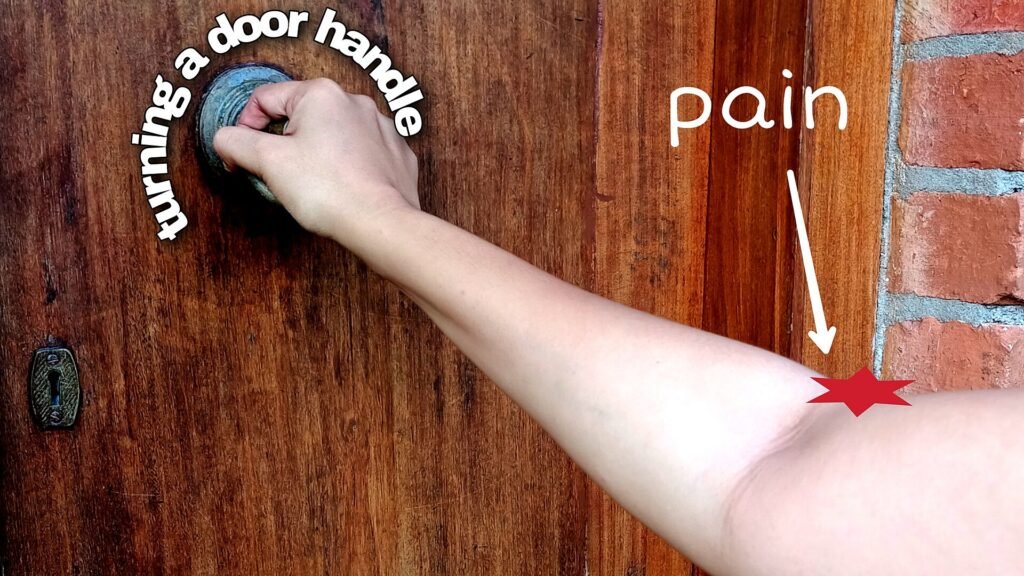
The NHS page on tennis elbow describes it as a condition that causes pain around the outside of the elbow, usually after overusing the forearm muscles and the tendons that attach them. It puts it simply: “Tendons are strong cords that connect muscle to bone.” The page says the condition is “more common in people between 35 and 54 years of age”, and among the activities that can bring it on it lists “computer work, such as typing or using a mouse”, next to racket sports and manual jobs.
The pain tends to get worse when “lifting or bending your arm”, when “gripping objects” and when “moving your wrist”. That last point matters for anyone who types all day: the trigger is often the forearm, not the elbow joint itself.
On self-care, the NHS suggests you:
- “avoid or reduce activities that make your symptoms worse”
- “try using a hot or cold pack (or a bag of frozen peas) wrapped in a towel on the affected area for up to 20 minutes every 2 to 3 hours”
- “try wearing a forearm strap or a wrist or elbow brace”, and it notes you can buy these from pharmacies
- “try doing simple exercises, such as bending and straightening your arm”
On how long it lasts, the page says: “Tennis elbow usually gets better after resting your arm for a few weeks, but it can sometimes last longer.” It advises seeing a GP if “you still have elbow pain after resting your elbow and trying self-care treatments for at least 2 weeks”. It also notes that “A GP may give you anti-inflammatory tablets”, and that “Physiotherapy may help if your symptoms have not improved after trying treatments at home for 6 weeks.”
One safety line from the same page is worth repeating for anyone using a gel at the same time as a strap: “Do not smoke or go near naked flames if you’re using ibuprofen gel because it’s flammable and there’s a risk of severe burns.”
Strap, sleeve or brace: what you are actually buying
The products sold as tennis elbow braces fall into two groups.
Counterforce straps are narrow bands, a few centimetres wide, worn on the upper forearm about two finger-widths below the bony point on the outside of the elbow. A pad on the inside of the band sits over the forearm muscles. The idea is to spread the pull of those muscles away from the sore tendon attachment. Three of the four products below are this type.
Sleeves and wider braces cover the elbow itself and add general compression. Some come with an extra strap. They feel more substantial but can be warmer and bulkier under a shirt sleeve.
Fit decides most of the result. A strap that is too loose slides down the forearm within an hour; one that is too tight leaves marks and can make the hand tingle. Measure the circumference of your forearm just below the elbow before ordering, and compare it with the range in the listing rather than guessing from a size letter.
Four tennis elbow straps compared
| Product | Style | Sizing | Key features from the listing |
|---|---|---|---|
| Bodyprox Tennis Elbow Brace (2-pack) | Counterforce strap | One adjustable size | Compression gel pad, Velcro closure, breathable material |
| Sleeve Stars Elbow Brace | Strap | Fits 9 to 23 in | Three straps for adjustment |
| AGPTEK Tennis Elbow Brace (2 pcs) | Counterforce strap | Fits 21 to 38 cm | Wavy silicone band, EVA pad |
| CAMBIVO Tennis Elbow Brace (2-pack) | Counterforce strap | Fits 10.5 to 15 in | 60% SBR, 30% polyester, 10% spandex; EVA pad; 2-year warranty |
Specs come from the Amazon listing bullets read in November 2026. Ratings and prices change often; check the listing before you buy.
Bodyprox Tennis Elbow Brace, 2-pack
The most reviewed of the four, and the safe default if you just want to try a strap.
- Rated 4.4 out of 5 from about 35,400 ratings; around $12.99 when checked.
- Compression gel pad on the inner side of the band.
- Velcro closure and breathable material, according to the listing.
Two straps in the box means one for each arm, or a spare while the other is in the wash. The gel pad is the main difference from cheaper foam-pad straps. If your forearm is very slim or very large, check the fit range on the listing first, since it is sold as a single size.
Sleeve Stars Elbow Brace
The widest stated size range, useful if you have struggled to find a strap that fits.
- Rated 4.3 out of 5 from about 15,100 ratings; around $16.95 when checked.
- The listing gives a fit range of 9 to 23 inches.
- Three straps, which lets you tighten the band in more than one place.
Sold singly, so it costs more per strap than the 2-packs. The extra straps help it stay put on a forearm that tapers sharply, which is where a single-strap band tends to slip.
AGPTEK Tennis Elbow Brace, 2 pcs
A low-cost pair with a silicone grip strip to stop the band sliding.
- Rated 4.4 out of 5 from about 9,900 ratings; around $9.99 when checked.
- Fits a forearm of 21 to 38 cm, according to the listing.
- Wavy silicone band on the inside and an EVA foam pad.
The silicone strip is the practical feature here: on a sweaty arm, bands without one often creep toward the wrist. EVA foam is firmer than gel, which some people prefer because the pressure feels more defined.
CAMBIVO Tennis Elbow Brace, 2-pack
The cheapest pair, with the fabric blend and warranty spelled out.
- Rated 4.4 out of 5 from about 3,700 ratings; around $8.99 when checked.
- Fits 10.5 to 15 inches.
- Made of 60% SBR, 30% polyester and 10% spandex, with an EVA pad and a 2-year warranty, per the listing.
The narrower size range suits an average forearm. If yours measures outside 10.5 to 15 inches, the Sleeve Stars range is the better match.
Using one sensibly
Put the strap on with your arm relaxed, pad over the fleshy muscle on the top of the forearm, about two finger-widths below the elbow crease. Tighten it until you feel firm contact when you grip, not before. Most people wear it during the activity that hurts, such as a typing session, a game or a day of DIY, and take it off afterwards.
Take it off and loosen it if your fingers go numb, tingle or change colour. Check the skin under the pad at the end of the day; a red mark that fades within minutes is normal, broken skin is not.
A strap works alongside the other NHS suggestions, not instead of them. Cutting back on the movement that hurts and using a cold or warm pack are on the same list. If you are unsure which of the two to reach for, our page on heat versus cold therapy sets out when each one is used. At the desk, a more neutral wrist position can reduce the load on the same forearm muscles; split keyboards are one option people try.
Verdict
For a first try, the Bodyprox 2-pack has the longest review history and a gel pad. If you have an unusually small or large forearm, the Sleeve Stars range of 9 to 23 inches is the one most likely to fit. The AGPTEK and CAMBIVO pairs are cheaper ways to test whether a strap helps at all. Whichever you pick, follow the NHS advice on rest and see a GP if things have not improved after two weeks.
Frequently asked questions
Does the NHS recommend a tennis elbow strap?
The NHS page lists wearing a forearm strap or a wrist or elbow brace among the things you can try yourself, along with rest, a hot or cold pack and simple arm exercises.
Where should a tennis elbow strap sit?
On the upper forearm, about two finger-widths below the bony point on the outside of the elbow, with the pad over the muscle rather than on the bone.
How tight should it be?
Firm enough that you feel the pad press when you grip something, loose enough that your fingers stay warm and normal in colour. Numbness or tingling means it is too tight.
Can I wear it all day?
Most people wear it during the activity that causes pain and take it off afterwards. Wearing it overnight is not what these straps are designed for, and the listings describe them for use during activity.
Can typing cause tennis elbow?
The NHS lists computer work, such as typing or using a mouse, among the activities that can lead to it, alongside racket sports and manual work.
How long does tennis elbow take to get better?
The NHS says it usually gets better after resting the arm for a few weeks, but can sometimes last longer. It suggests seeing a GP if pain continues after at least two weeks of rest and self-care.
Is a strap or a sleeve better?
They do different things. A strap targets the forearm muscles just below the elbow; a sleeve gives general compression over the joint. For pain on the outside of the elbow, a strap is the product the NHS wording describes most closely.
Sources
- NHS, Tennis elbow.
- Amazon US product listings for Bodyprox, Sleeve Stars, AGPTEK and CAMBIVO tennis elbow straps, bullets read in November 2026.
From the Relief for Body desk
Every guide here is built from the manufacturer’s own documentation, published safety guidance, and the pattern in what owners report over months of use, not from a lab or a clinic. Nothing is sponsored, and verdicts are settled before any affiliate link goes in. We are not clinicians, and nothing on this site replaces one. How we review explains the process.
This article is general information, not medical advice. If pain is sharp, persistent, or getting worse, see a clinician.
Google lets you pick which sites come up first in your own results.