Relief for Body is reader-supported. When you buy through links on our site, we may earn an affiliate commission. This doesn't affect our verdicts.
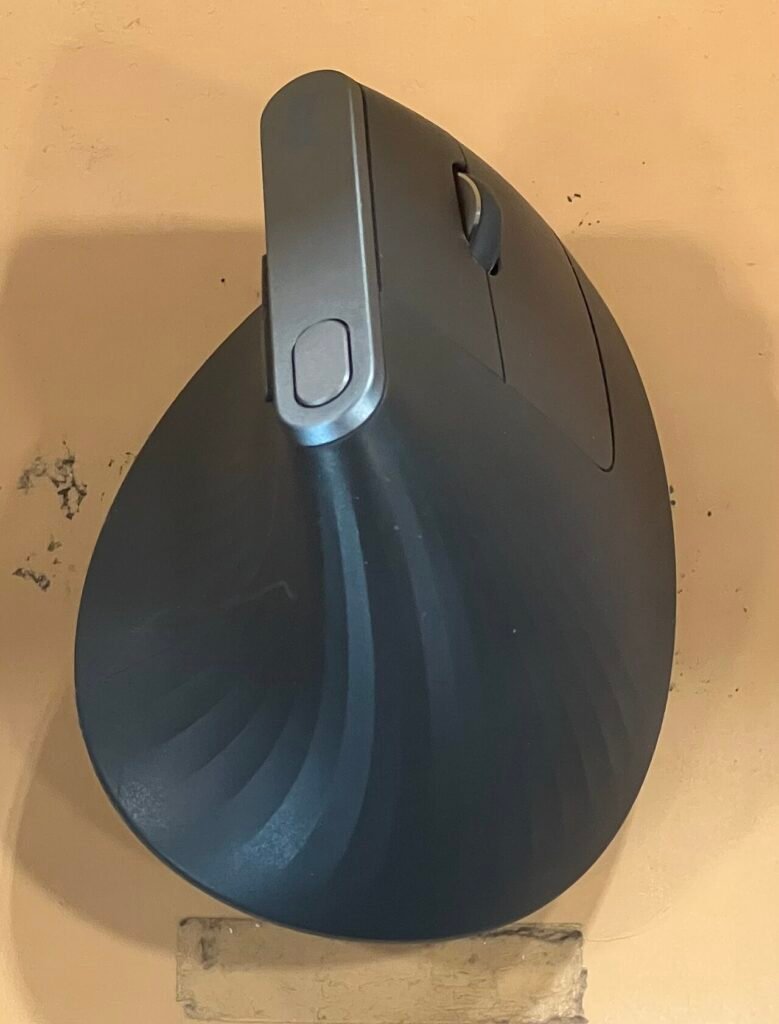
The research on vertical mice is consistent on one point and thin on everything else. Compared with a standard mouse, a vertical one turns your forearm less (less pronation) and, in some studies, lowers the activity of the muscles that extend the wrist. What no study I read shows is that this prevents or treats a hand or wrist condition. If you want to try one, the evidence supports it as a comfort experiment, not as medical equipment.
What a vertical mouse changes
A standard mouse sits flat, so your palm faces down and your forearm rotates inward. That rotation is pronation. A vertical mouse stands the hand closer to a handshake position. The Canadian Centre for Occupational Health and Safety (CCOHS) lists joystick and vertical or column mice among the alternatives to a standard mouse and says they keep the hand and wrist in a neutral handshake position and move the whole arm instead of just the wrist. CCOHS also says your forearm, wrist and fingers should all be in a straight line, and that you should move the mouse from the elbow rather than just the wrist.
I could not read the OSHA mouse guidance, because the pages refused automated access. Everything below rests on CCOHS, the NHS and published studies.
What the studies measured
In a 2013 study by Quemelo and Vieira, 16 people used both mouse types. Average forearm pronation was 28 degrees with the vertical mouse and 42 with the standard one. Extensor carpi muscle activity was 13 percent versus 16 percent, and extensor digitorum activity 10 versus 13 percent. Satisfaction with the vertical mouse was rated good. The catch: time to reach a target was longer, 4.2 seconds against 3.4. The authors said training and familiarization are required.
A 2015 study by Odell and Johnson had 12 people try a flat mouse, a fully vertical one and several concept designs. The concepts reduced pronation relative to the flat mouse. The fully vertical mouse reduced it too but had the poorest pointing performance. The authors concluded that raising the mouse and angling the top could improve wrist posture without hurting performance. One caution for context: the authors had an industry affiliation, and the work was about developing new mouse shapes.
| Study | People | Main result |
|---|---|---|
| Quemelo and Vieira, 2013 | 16 | Less pronation and lower extensor activity; slower pointing |
| Odell and Johnson, 2015 | 12 | Concept designs cut pronation; fully vertical pointed worst |
| Schmid and colleagues, 2015 | 21, all with carpal tunnel syndrome | Ulnar deviation lower with vertical mouse; carpal tunnel pressure not reduced |
| Clarisse and colleagues, 2022 | 18 | Familiarization took about 30 repetitions; slower learning on vertical than slanted |
Where the evidence stops
The most useful study for anyone with symptoms is Schmid and colleagues. They looked at 21 patients with carpal tunnel syndrome and measured pressure inside the carpal tunnel while they used different devices. Pressure rose while using a mouse. The vertical mouse did reduce ulnar deviation, which is the sideways bend of the wrist toward the little finger, but none of the devices reduced carpal tunnel pressure. The authors concluded that choice among them depends on personal preference.
So the honest summary is this. The posture changes show up in the lab. Whether they turn into fewer injuries over months is not shown by anything here, because these are small comparisons of 12 to 21 people doing short tasks. A mouse that changes a joint angle is not the same as a mouse that protects a nerve.
Who might benefit, and who might not
People with no diagnosed condition whose forearm feels tired or twisted after long mouse sessions are the most reasonable candidates. The pronation data give a plausible mechanism, and the downsides are cost and a learning period. Clarisse and colleagues, researchers at the French occupational safety institute INRS, had 18 women practice with slanted and vertical mice. Familiarization leveled off after about 30 repetitions for both, and learning was slower with the vertical one. They suggested considering a slanted mouse rather than a vertical one. That is a fair counterweight: a slanted design may give you part of the angle with less adjustment.
If you already have carpal tunnel symptoms, a vertical mouse is not a treatment. The NHS points to wrist splints (worn at night, up to 6 weeks), cutting back repetitive wrist bending or gripping, and, when self-care fails, steroid injections or surgery.
Setup tips that do not depend on the mouse
CCOHS gives guidance that applies to any model. Pick a mouse that fits your hand and supports its natural curve. A larger mouse reduces reliance on the small muscles of the wrist. Keep your grip relaxed, and keep forearm, wrist and fingers in line. Be careful with wrist rests, since CCOHS warns that improper use can restrict blood flow and contribute to carpal tunnel syndrome.
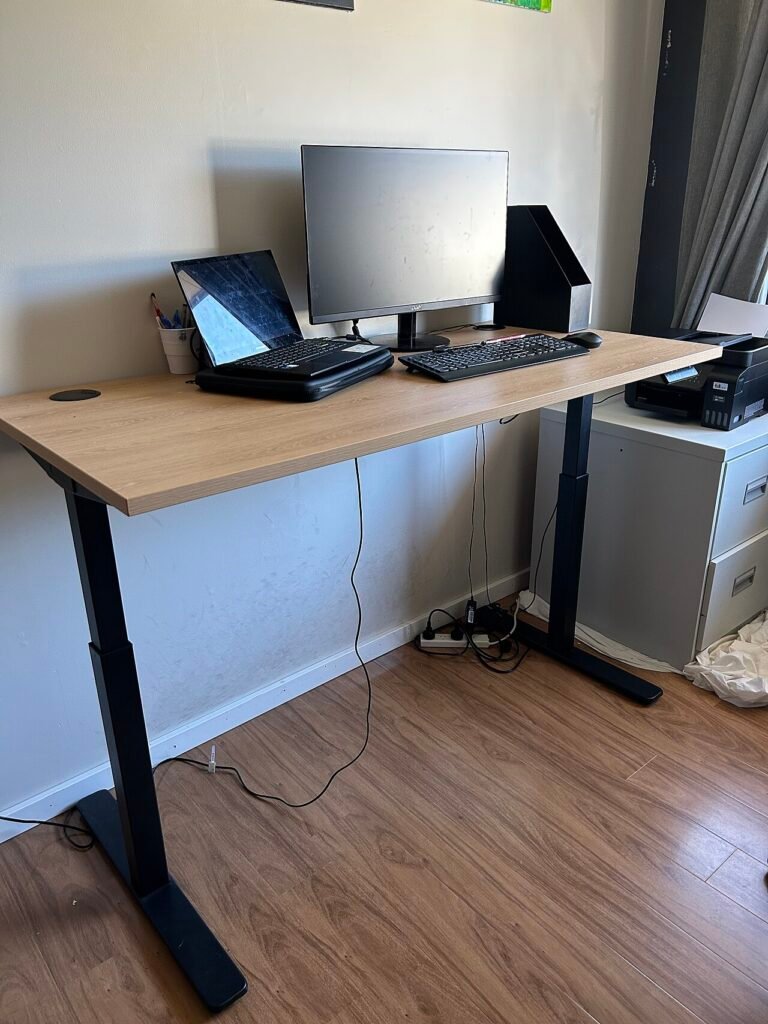
Elbow position comes from the desk, not the mouse. The site’s pieces on ergonomic desk setup and desk and chair height cover the geometry that makes moving the mouse from the elbow possible in the first place. If I had to rank the changes, I would fix the desk and the grip first and treat the mouse as the third change, not the first.
When wrist or hand symptoms need a doctor
The NHS describes carpal tunnel syndrome as pain in the fingers, hand or arm, numb hands, tingling or pins and needles, and a weak thumb or trouble gripping, often worse at night. It advises seeing a GP if symptoms are getting worse or are not going away, or if home treatment is not working. Risk factors it lists include repetitive wrist work, pregnancy, being overweight, arthritis, diabetes, a family history, and a previous wrist injury. A new mouse should not delay that visit. If symptoms are present, get them assessed before assuming equipment will solve it.
Our take
A vertical mouse reduces forearm rotation in small lab studies, and that is the whole of what is shown. It is a reasonable thing to try if your forearm tires, as long as you allow a learning period and accept slower pointing at first. It is not a treatment, and for numb or tingling hands the one patient study found no drop in carpal tunnel pressure, and the NHS points to splints, less repetitive bending or gripping, and a GP visit if symptoms persist.
Common questions about ergonomic mice
Does a vertical mouse prevent carpal tunnel syndrome?
None of the studies I read show that. The one study in people who already had carpal tunnel syndrome found the vertical mouse did not reduce carpal tunnel pressure.
How long does it take to get used to a vertical mouse?
One study found familiarization leveled off after about 30 repetitions of a pointing task, and that learning was slower on a vertical mouse than a slanted one. Another found pointing was slower with the vertical mouse. Daily work may take longer than a lab task.
Is a slanted mouse a better compromise?
One group suggested considering a slanted mouse rather than a vertical one, and another found angled concepts could cut pronation without hurting performance. The samples were small, so treat that as a lead rather than a rule.
When should I see a doctor about my wrist or hand?
If you have numbness, tingling, a weak grip, or symptoms that are getting worse or not going away, the NHS advises seeing a GP.
From the Relief for Body desk
Every guide here is built from the manufacturer’s own documentation, published safety guidance, and the pattern in what owners report over months of use, not from a lab or a clinic. Nothing is sponsored, and verdicts are settled before any affiliate link goes in. We are not clinicians, and nothing on this site replaces one. How we review explains the process.
This article is general information, not medical advice. If pain is sharp, persistent, or getting worse, see a clinician.
Google lets you pick which sites come up first in your own results.