Relief for Body is reader-supported. When you buy through links on our site, we may earn an affiliate commission. This doesn't affect our verdicts.
Most desk height guidance comes down to one test: sit with your shoulders relaxed and your elbows bent close to 90 degrees, and the work surface should meet your forearms right about there. Groups that publish workplace ergonomics guidance, including OSHA’s computer workstation checklist and several university ergonomics programs, describe this as a starting point rather than a fixed rule. It gets you close. It does not replace an actual look at your own setup, your own chair, and how you personally sit by hour four of a workday.
The short version: seated desks built for an average adult tend to land around 28 to 30 inches high. Standing desks and converters usually adjust somewhere between 22 and 48 inches to cover a wider range of heights and both postures. Neither number means much without knowing your own height and your chair.
The elbow rule, and why it’s the starting point everyone uses
Sit down, let your arms hang loose at your sides, then bend your elbows to roughly a right angle without lifting your shoulders. Wherever your forearms land is close to where your keyboard and desk surface should sit. Your wrists should stay close to flat, not bent up toward the ceiling or drooping down toward your lap. That’s the whole rule. It shows up in almost every workplace ergonomics guide because it works across a wide range of body types without needing a chart.
It breaks down a little at the extremes. Torso length varies more than overall height does, so two people who are both 5’8″ can need desk heights three inches apart depending on how their proportions run. That’s the honest limit of any formula here. It’s a good first pass, not a measurement with a decimal point.
A quick worked example
Here’s how the elbow rule tends to translate into actual inches, based on the ranges commonly cited in office ergonomics references. Treat this as a starting point to test against your own arms, not a number to chase blindly.
| Your height | Seated desk height (approx.) | Chair seat height (approx.) |
|---|---|---|
| 5’0″–5’3″ | 24″–26″ | 15″–17″ |
| 5’4″–5’7″ | 26″–28″ | 16″–18″ |
| 5’8″–5’11” | 28″–30″ | 17″–19″ |
| 6’0″–6’3″ | 29″–31″ | 18″–20″ |
Fixed-height desks built to a single national average, usually somewhere near 5’9″, explain a lot of the mismatch complaints from people outside that range. A person at 5’2″ using a 30 inch desk isn’t imagining the shoulder ache. The math is genuinely off for them.
Where the chair actually fits into the equation
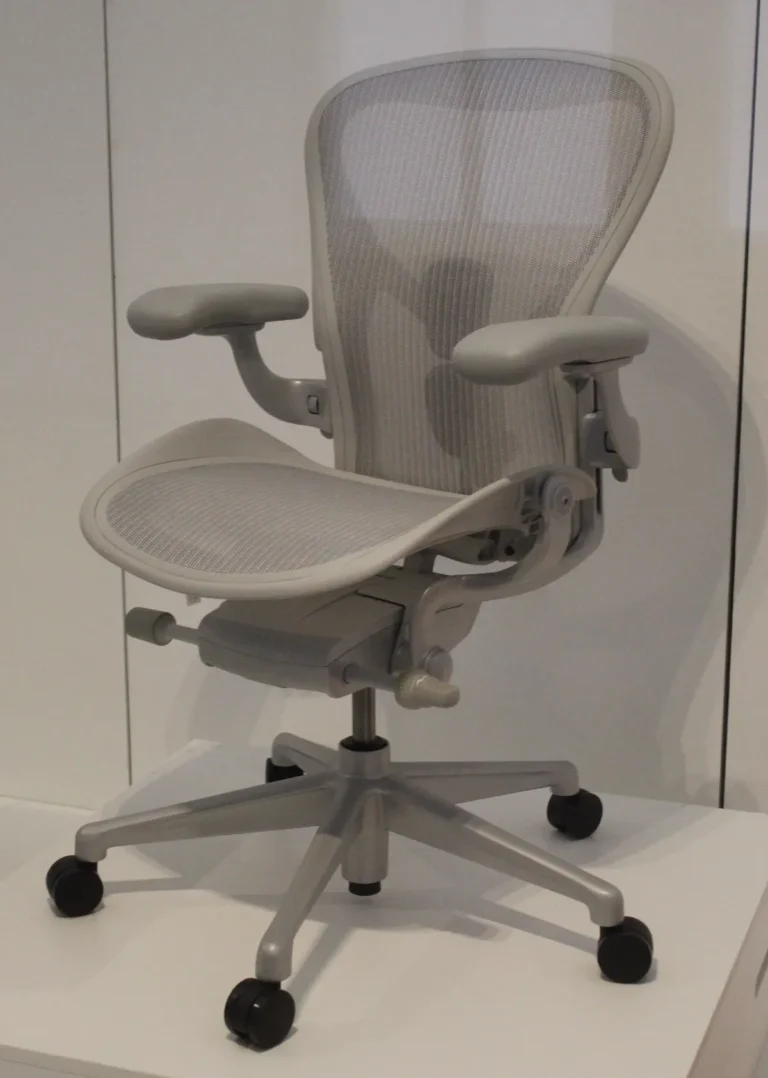
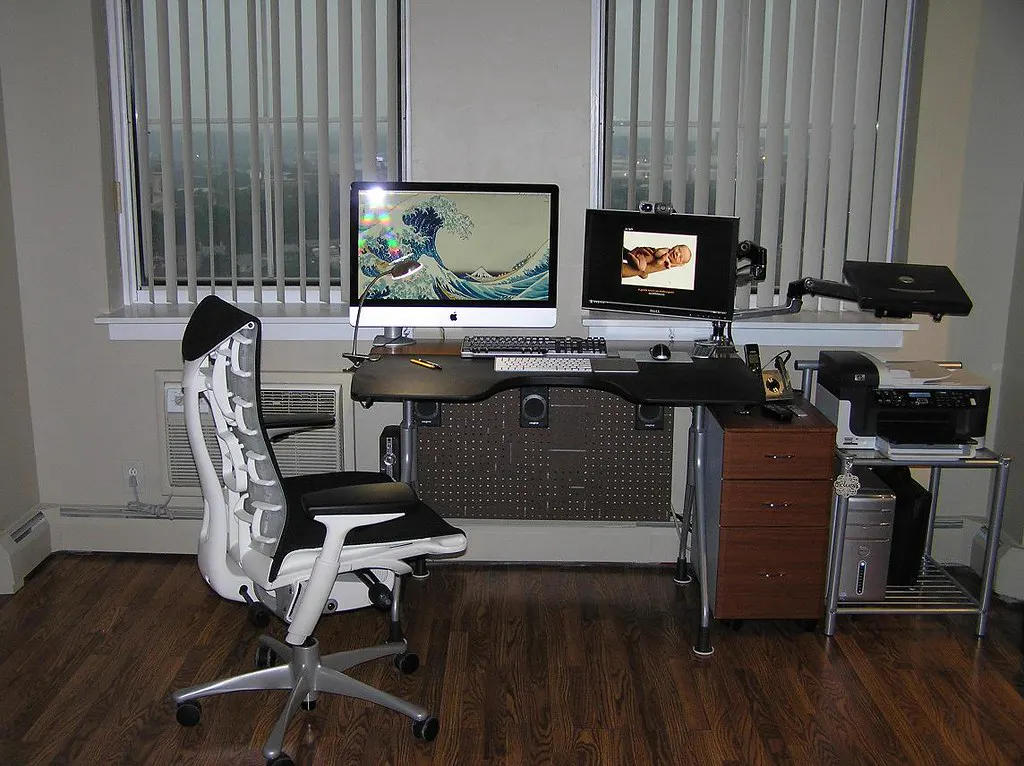
Desk height only means something once the chair is in the right place under it. If the seat is too low relative to the desk, your shoulders shrug up to reach the keyboard. Too high, and your wrists cock upward on every keystroke. The goal is feet flat on the floor (or on a footrest), thighs roughly level with the floor, and elbows landing at that same 90 degree mark once you’re seated at the desk itself, not floating in open air.
People under about 5’4″ run into this constantly with standard office chairs, since most seat-height ranges are built around a taller average and simply don’t go low enough. A chair sized for a shorter frame, or one with a deeper adjustment range, solves more of this than any desk change does. Our guide to office chairs built for shorter people covers what to check on the spec sheet before buying one.
The mismatches that show up most often
Three patterns come up again and again in ergonomics forum threads and workplace assessments. A desk that’s too high forces the shoulders up toward the ears, which tends to show up as neck and upper-trapezius tension by mid-afternoon. A desk that’s too low pulls the whole upper body forward into a hunch, rounding the shoulders and putting more load through the lower back. And a chair that’s the wrong height for the desk, regardless of which way it’s off, usually produces both of the above at once.
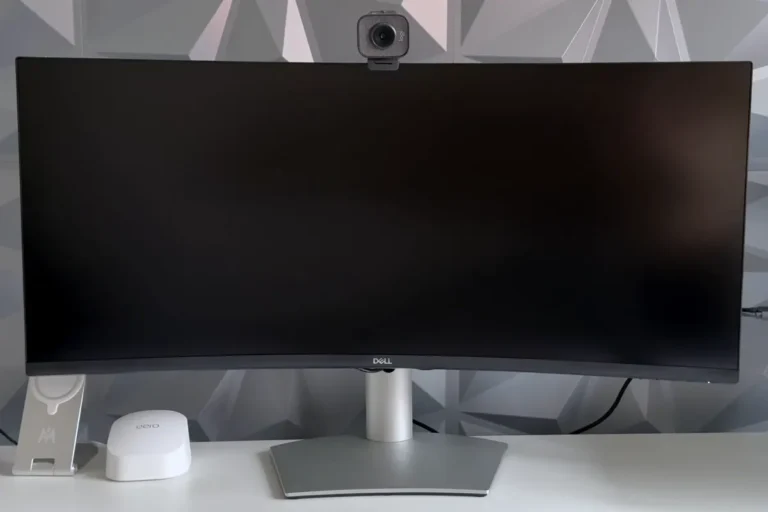
Monitor height compounds all of this. A screen set too low drags the head and neck forward even when the desk and chair are correct, so it’s worth checking that separately once the desk and seat are dialed in. Our guide to monitor height walks through the eye-level test in under a minute.
If you can adjust the desk instead of the chair
Fixed-height desks leave the chair doing all the adjusting, which only works within a limited range before something else gives. A sit-stand converter or a full electric desk removes that constraint by moving the work surface itself, which is often the more direct fix for someone at either end of the height spectrum. We compare the two directly in standing desk converter vs. full standing desk, including which one makes more sense on a tight budget or in a small space.
Alternating between sitting and standing changes the math slightly too, since standing desk height needs to sit a bit higher than the seated number to keep the same elbow angle. If you’re weighing whether to bother standing at all during the day, how often people are generally advised to get up from a desk chair is worth reading alongside this one.
A five-minute way to test your current setup
Sit down at your desk the way you normally would, not straightened up for the test. Let one arm rest naturally on the desk and check the angle at the elbow. If it’s noticeably less than 90 degrees, closer to a sharp bend, the desk is likely too high relative to the chair. If the arm has to reach down and the wrist bends upward to type, the desk is likely too low, or the chair is sitting too high for it.
Next, look at the feet. Flat on the floor with the knees roughly level with the hips is the target. Knees noticeably higher than the hips usually means the chair is raised too far to compensate for a tall desk, which is the pattern that points toward a footrest or a lower desk rather than a chair adjustment. Finally, check the wrists at the keyboard. A flat, neutral wrist beats one that’s cocked up or down, and this one is often the first thing to go when the desk and chair heights are even slightly off from each other.
None of these checks need special tools. A phone held at arm’s length can capture a rough side profile if it’s hard to judge your own posture from the inside, and comparing that photo against the elbow-angle description above tends to make the mismatch obvious pretty quickly.
When to stop measuring and ask someone
A tape measure and the elbow test solve most everyday setups. They don’t solve a case where someone has ongoing wrist, neck, or back discomfort that isn’t improving with a better setup. That’s a conversation for a physical therapist or occupational health provider who can actually watch how a specific body moves at a specific desk, not a formula on a website. Setup changes are a reasonable first step. They’re not a substitute for that conversation if the discomfort sticks around.
Verdict
Start with the elbow test and the table above, adjust the chair before you consider replacing the desk, and treat both as a starting point you fine-tune over a week, not a number you set once and forget.
What’s the standard desk height for someone of average height?
Most fixed-height office desks are built around 28 to 30 inches, which roughly fits someone in the 5’6″ to 5’10” range. Ergonomics guidance treats this as a manufacturing average, not a universal fit, which is why shorter and taller people often need an adjustable desk or a chair with a wider height range to compensate.
How do I know if my chair is too low for my desk?
A common sign is your shoulders creeping up toward your ears while typing, since you’re reaching upward to the keyboard instead of resting your forearms at roughly 90 degrees. If raising the chair puts your feet off the floor, that’s usually the point where a footrest becomes the more practical fix.
Does the elbow rule work the same way for standing desks?
Yes, with one adjustment: since you’re standing rather than seated, the desk surface needs to sit slightly higher to keep your elbows at that same 90 degree angle. Most sit-stand desk manuals include a rough standing-height chart by user height for exactly this reason.
Can a mismatched desk and chair actually cause pain?
Ergonomics guidance links sustained awkward postures, like a hunched back or shrugged shoulders held for hours daily, to a higher likelihood of muscle tension and fatigue over time. That’s a pattern reported broadly, not a guarantee for any one person. Persistent or worsening discomfort is worth discussing with a healthcare provider rather than troubleshooting alone.
Is it worth measuring my exact elbow height instead of using a general chart?
If you have ten minutes, yes. Sit in your actual chair at your actual desk, check where your relaxed elbow lands, and adjust from there rather than trusting a height-based chart alone. Torso length varies enough between people of the same height that the chart is a starting point, not a replacement for checking yourself.
From the Relief for Body desk
Every guide here is built from the manufacturer’s own documentation, published safety guidance, and the pattern in what owners report over months of use, not from a lab or a clinic. Nothing is sponsored, and verdicts are settled before any affiliate link goes in. We are not clinicians, and nothing on this site replaces one. How we review explains the process.
This article is general information, not medical advice. If pain is sharp, persistent, or getting worse, see a clinician.
Google lets you pick which sites come up first in your own results.