Relief for Body is reader-supported. When you buy through links on our site, we may earn an affiliate commission. This doesn't affect our verdicts.
Short answer: If you’re under about 5’4″, look for two numbers before anything else: a seat that goes down to roughly 15″ and a seat depth of 16″ or less (or one that slides back). The Steelcase Series 1 with its optional short cylinder (14¾” to 17¾”) and the Herman Miller Aeron in Size A (14.4″ to 19.3″, 16″ deep seat) both get there. Most budget mesh chairs don’t, so plan on a footrest with them.
This is a buying guide, not medical advice. If you already have back, hip or leg pain that sitting makes worse, a physiotherapist or occupational therapist can set up your chair properly in one visit.
Why most office chairs don’t fit shorter people
Two measurements cause nearly all the trouble. The first is seat height. OSHA’s workstation guidance says a chair is at the right height when the “entire sole of the foot can rest on the floor with the back of the knee slightly higher than the seat.” When the seat can’t go low enough, your feet dangle or you perch on the front edge, and the backrest stops doing its job.
The ergonomics standard used by the furniture industry (ANSI/HFES 100-2007) puts the seat height for a 5th-percentile woman at 14.8″, including an inch for shoe heels, according to a Knoll checklist built on it. Plenty of chairs bottom out at 16″ or 17″. Branch, for example, lists its Ergonomic Chair at 17″ to 21″ and says it suits people from 5’2″ to 6’2″.
The second is seat depth. OSHA notes that seat-depth adjustment lets “shorter users … sit with their backs against the backrest without the front edge of the seat pan contacting their knees.” If the seat is too deep, you either sit forward with no back support or you sit back and the front edge presses behind your knees. You should be able to fit two or three fingers between the seat edge and the back of your knee.
The specs side by side
| Chair | Seat height | Seat depth | Depth adjusts? | Price seen |
|---|---|---|---|---|
| Steelcase Series 1, standard cylinder | 16½” to 21½” | 15½” to 17¾” | Yes, 2¼” of travel | $584 at Steelcase, $499 on Amazon |
| Steelcase Series 1, short cylinder (option) | 14¾” to 17¾” | 15½” to 17¾” | Yes | Ordered as an option |
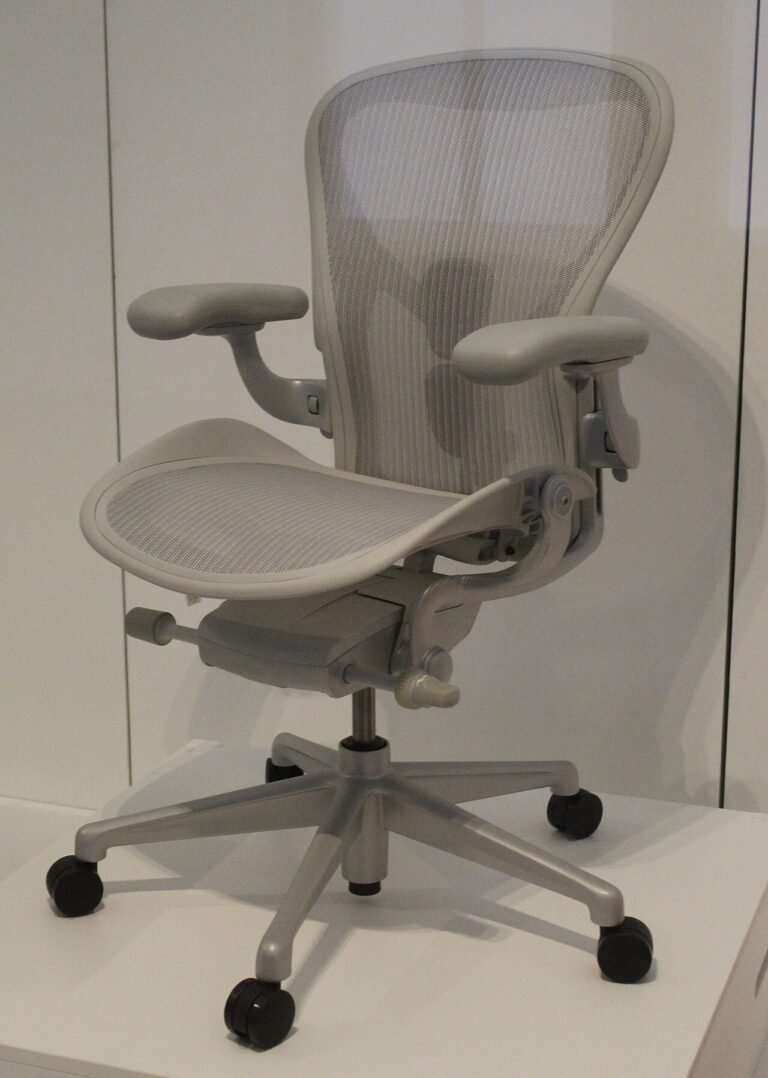
| Herman Miller Aeron, Size A | 14.4″ to 19.3″ | 16″ | No, the small size is the fix | $600 on Amazon (Classic) |
| Herman Miller Aeron, Size B (for comparison) | 14.8″ to 22.8″ | 17″ | No | Not compared |
| Sihoo Doro C300 | Not clearly published | 18.11″, fixed | No | $279.99 at Sihoo, $349.99 on Amazon |
Steelcase figures come from the Series 1 spec guide, Aeron figures from Herman Miller’s product details page, Sihoo figures from its own product page. Prices were read in October 2026 and move often.
Steelcase Series 1
The best all-round fit for shorter people, as long as the seat height range suits you.
- Seat depth slides over 2¼”, from 15½” to 17¾”, so you can pull it in until your knees are clear
- Standard seat height 16½” to 21½”; Steelcase’s spec guide lists a short cylinder at 14¾” to 17¾” for people who need to go lower
- Arms adjust from 6½” to 11″ above the seat, and the lumbar sits 6½” to 8¾” above it
- The Amazon listing below doesn’t mention the short cylinder, so assume the standard one if you need to sit lower
Herman Miller Aeron, Size A
The pick if you want a mesh seat and the lowest standard range here.
- Size A seat height runs 14.4″ to 19.3″ on Herman Miller’s spec page, and the seat is 16″ deep
- The Aeron has no seat-depth slider; you get a smaller frame instead, so order Size A, not B
- Adjustable arms run 7.5″ to 11.5″ above the seat on the current model
- The Amazon listing is the Classic Aeron with fixed arms, and it gives the seat height as about 14.4″ to 19.5″
Sihoo Doro C300
A budget chair with good arms, but it isn’t built for short legs, so pair it with a footrest.
- Seat depth is fixed at 18.11″ on Sihoo’s own product page, deeper than both chairs above
- 4D armrests and a 330 lb weight rating
- Sihoo sells a Footrest Version for $329.99; the C300 Pro adds depth adjustment but has a bigger cushion meant for larger people
A footrest fixes more than you’d think
If your desk is fixed at standard height, you usually can’t drop the chair all the way down anyway, because your elbows would end up below the desk. OSHA’s answer is a footrest: raise the chair to suit the desk, then bring the floor up to your feet. That one change works with almost any chair, including one you already own.
Our guide on whether you need a footrest goes into the details. A simple adjustable one is enough for most people.
Fellowes Office Suites Adjustable Footrest
A plain metal footrest with three heights, which covers the gap for most shorter people.
- Three heights: 4⅛”, 4⅞” and 5⅝”
- Platform tilts up to 30°, and it can lock or rock freely
- Platform is 17″ wide and 12½” deep
When the seat is too deep
A chair without depth adjustment can still work if you fill the gap behind you. A firm lumbar cushion moves you forward an inch or two, which clears the back of your knees and puts support where your lower back actually is. See our lumbar support cushion guide for the shapes that work. If sitting hurts lower down, our page on tailbone pain when sitting covers seat cushions too.
Some shorter people get on better with a different posture altogether. Our look at kneeling chair pros and cons explains who that suits.
Set the chair up in this order
Start with the desk, not the chair. Sit with your shoulders relaxed and your elbows at about 90°, set the seat so your forearms are level with the keyboard, then sort out your feet with the footrest if they don’t reach. Our desk and chair height guide walks through it, and the desk height calculator gives you numbers for your height.
Then adjust seat depth, the lumbar support and the arms, and finish with the screen. Monitor height matters more when you’re short, because a screen set for an average-height colleague sits too high. The full checklist is in our ergonomic desk setup guide. If you’d rather lower the desk than raise the floor, compare a standing desk converter and a full standing desk, and whatever you sit on, get up regularly.
Verdict
Check the lowest seat height and the seat depth before anything else. The Steelcase Series 1 is the best fit for most shorter people because the seat slides in, and the short cylinder takes it down to 14¾”. The Aeron in Size A is the mesh alternative. On a budget, or at a fixed-height desk, a footrest under any decent chair does most of the work.
Frequently asked questions
What seat height do I need if I’m 5’0″ to 5’3″?
Usually somewhere around 15″ to 16″ with shoes on. The ANSI/HFES standard puts the figure for a 5th-percentile woman at 14.8″. To check yours, sit with your feet flat and your thighs roughly level, then measure from the floor to the top of the seat.
What seat depth is right for a short person?
Deep enough to support your thighs, shallow enough to leave two or three fingers of space behind your knees when your back is against the backrest. For many people under 5’4″ that means 16″ or less, or a seat that slides back.
Is the Herman Miller Aeron good for short people?
In Size A, yes. Herman Miller lists its seat height at 14.4″ to 19.3″ with a 16″ deep seat. Size B is deeper (17″) and is the size most often sold, so check before ordering.
Does the Sihoo Doro C300 have seat depth adjustment?
No. Sihoo lists the C300 seat depth as fixed at 18.11″. The C300 Pro has depth adjustment, but Sihoo describes it as having a bigger cushion for larger people.
Can I just use a footrest instead of buying a new chair?
Often, yes. If your current chair is comfortable apart from your feet not reaching the floor, a footrest solves that. It won’t fix a seat that’s too deep; for that, try a lumbar cushion first.
Should my feet touch the floor when I sit?
Your whole foot should rest flat on the floor or on a footrest, with the back of your knee slightly higher than the seat. Dangling feet put pressure under your thighs.
Are chairs sold as “petite” really different?
Sometimes only in name. Ignore the label and compare the published lowest seat height and seat depth. If a brand doesn’t publish them, that tells you something too.
Sources
- OSHA, Computer Workstations eTool: Chairs, read October 2026.
- Knoll, Remix ergonomic checklist, citing ANSI/HFES 100-2007, read October 2026.
- Steelcase, Series 1 spec guide (February 2022), read October 2026.
- Herman Miller, Aeron product details, read October 2026.
- Sihoo, Doro C300 product page and C300 Pro page, read October 2026.
- Branch, Ergonomic Chair, read October 2026.
- Fellowes Office Suites footrest, product listing on Amazon, read October 2026.
From the Relief for Body desk
Every guide here is built from the manufacturer’s own documentation, published safety guidance, and the pattern in what owners report over months of use, not from a lab or a clinic. Nothing is sponsored, and verdicts are settled before any affiliate link goes in. We are not clinicians, and nothing on this site replaces one. How we review explains the process.
This article is general information, not medical advice. If pain is sharp, persistent, or getting worse, see a clinician.
Google lets you pick which sites come up first in your own results.