Relief for Body is reader-supported. When you buy through links on our site, we may earn an affiliate commission. This doesn't affect our verdicts.
The positions most clinicians suggest for sleeping with sciatica are on your back with a pillow under your knees, or on your less painful side with a firm pillow between your knees. Both keep the pelvis level and take tension off the lower spine and the nerve. Stomach sleeping tends to make it worse because it arches the low back. A medium-firm mattress, a few gentle stretches before bed and a careful way of getting up in the morning usually matter as much as the position itself.
This article is general information, not medical advice. Sciatica has several causes, and a doctor or physical therapist who has examined you is the right person to tailor any of it. See the warning signs section below before trying anything.
Why sciatica often feels worse at night
Sciatica is pain that follows the sciatic nerve, from the lower back or buttock down the back of the leg. It is usually caused by something pressing on or irritating a nerve root in the lower spine, such as a bulging disc, narrowing of the spinal canal, or a tight muscle deep in the buttock. If you are not sure which, our comparison of piriformis syndrome and sciatica explains how they differ.
At night you hold one posture for hours with no movement to ease it, and a mattress that sags or a twisted hip can keep the nerve under strain the whole time. That is why the position you settle into, and how you support it, makes a difference.
Position 1: on your back, knees supported
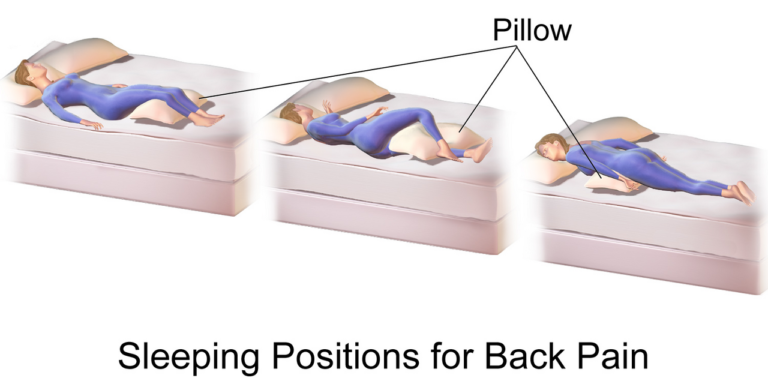
Lying flat with straight legs pulls the low back into a slight arch. Slide a pillow or a rolled blanket under your knees so they bend a little, and the arch flattens out. Many people find this the easiest position to hold all night.
- Use a pillow that lifts the knees a few inches. Too high and the hips start to round.
- Keep your head pillow low enough that your chin is not pushed toward your chest.
- A small rolled towel under the waist can fill the gap if your back still arches.
Our guide to sleeping positions and pillows for lower back pain covers pillow heights in more detail.
Position 2: on your side, pillow between the knees
Most people with sciatica sleep on the side that hurts less, though some find the reverse more comfortable, so try both. Bend your knees slightly toward your chest and put a firm pillow between them. Without it, the top leg drops forward, twists the pelvis and pulls on the low back.
- The pillow should keep the top knee level with the hip, not just fill the gap at the knees. A full-length body pillow or a contoured knee pillow for side sleepers does this better than a thin one.
- If there is a gap between your waist and the mattress, a small rolled towel there keeps the spine straight.
- Avoid curling up tightly. A gentle bend is enough.
Position 3: the fetal position, for some disc problems
When a herniated disc is the cause, some people find relief lying on their side with the knees drawn up further toward the chest, which opens the space between the vertebrae a little. It does not suit everyone, and it can aggravate other causes, so stop if the leg pain spreads or gets sharper.
The position to avoid
Sleeping on your stomach puts the low back into an arch and twists the neck for hours. If it is the only way you can fall asleep, a thin pillow under the hips reduces the arch, and our guide to switching away from stomach sleeping lays out a gradual way to change the habit.
Your mattress
A mattress that sags lets the hips sink and bends the spine. One that is very hard can push on the hips and shoulders. Medium-firm is the usual recommendation, and a randomized trial on low back pain found people did better on medium-firm than firm mattresses. We go through what that trial measured, and what it did not, in mattress firmness and back pain. If you cannot replace the mattress, a firm topper or moving the mattress to the floor for a few nights are cheap ways to test whether firmness is part of the problem.
Before bed
- Gentle stretches. A lying figure-four stretch for the buttock and a knee-to-chest stretch are commonly suggested. Move slowly and stop at mild tension. Our sciatica stretches and exercises page shows the form and hold times, and hip flexor stretches help if you sit most of the day.
- Heat or cold. Fifteen to twenty minutes of heat can loosen tight muscles, and cold can calm a fresh flare. Do not fall asleep on a heating pad; sleeping with a heating pad explains why burns happen at low settings.
- A short walk. Sitting for the whole evening often stiffens things up before bed.
Getting in and out of bed
Twisting at the waist as you sit up is a common trigger. Use the log roll: roll onto your side with your knees bent, drop your feet over the edge, and push up with your arms so your shoulders and hips move together. Reverse it to lie down.
Warning signs that need a doctor now
Get urgent care if sciatica comes with numbness in the groin or inner thighs, new trouble controlling your bladder or bowels, weakness that is getting worse in one or both legs, or symptoms in both legs at once. These can point to pressure on the nerves at the base of the spine, which needs prompt treatment. Fever, unexplained weight loss or a history of cancer alongside back pain also need a prompt check. Our guide to low back pain red flags separates what is urgent from what can wait for a routine appointment.
Questions readers ask
What is the best sleeping position for sciatica?
On your back with a pillow under your knees, or on your side with a firm pillow between your knees, are the two most often recommended. Both keep the pelvis level and reduce strain on the lower spine. Try each for a few nights to see which eases your pain.
Is it better to sleep on the painful side or the other side?
Most people are more comfortable lying on the side that does not hurt, with a pillow between the knees. Some find the opposite, so test both. The pillow matters more than the side, because it stops the top leg twisting the pelvis.
How should you sleep with sciatica during pregnancy?
On your side, usually the left, with a pillow between the knees and another under the bump, is the usual advice in later pregnancy. A full-length pregnancy pillow can do both jobs. Ask your midwife or obstetrician about any new or severe leg pain.
What is the worst thing you can do for sciatica?
Long periods of bed rest, sleeping on your stomach, sitting for hours without a break and twisting or lifting heavy loads tend to aggravate it. Gentle movement through the day usually helps more than staying still.
Should you sleep with sciatica on a firm or soft mattress?
Medium-firm is the usual advice. A soft mattress lets the hips sink and bends the spine, and a very hard one can press on the hips and shoulders. A firm topper is an inexpensive way to adjust a mattress that is too soft.
From the Relief for Body desk
Every guide here is built from the manufacturer’s own documentation, published safety guidance, and the pattern in what owners report over months of use, not from a lab or a clinic. Nothing is sponsored, and verdicts are settled before any affiliate link goes in. We are not clinicians, and nothing on this site replaces one. How we review explains the process.
This article is general information, not medical advice. If pain is sharp, persistent, or getting worse, see a clinician.
Google lets you pick which sites come up first in your own results.